Chemical Damp Course Northern Beaches
A new damp barrier injected low in the brickwork, then the finish rebuilt over it.
A chemical damp course is the most common fix for brick walls on the Northern Beaches with genuine rising damp. It puts a new barrier into the wall without removing any bricks: we drill into one continuous mortar joint along the base of the wall and inject a damp-proofing cream that spreads through the mortar and stops water rising past it.
When an injected course suits a Northern Beaches house
It suits most solid and double brick walls. That covers the Federation and inter-war brick houses in Manly, Fairlight and Balgowlah, the brick bungalows of Freshwater and Curl Curl, and many of the post-war brick homes across Dee Why and Collaroy. If the walls are brick, the mortar joints are reasonably intact and the readings show the classic rising damp pattern, an injected course is usually the right choice.
It doesn’t suit everything. Sandstone footings, rubble walls and very soft early bricks don’t hold the cream evenly, so for those we use a physical damp course instead. And a damp course only stops water rising through the wall. If a garden bed or path sits above it, or the room is dug into a hillside, water can go around it; those walls need tanking and drainage too.
How we put it in
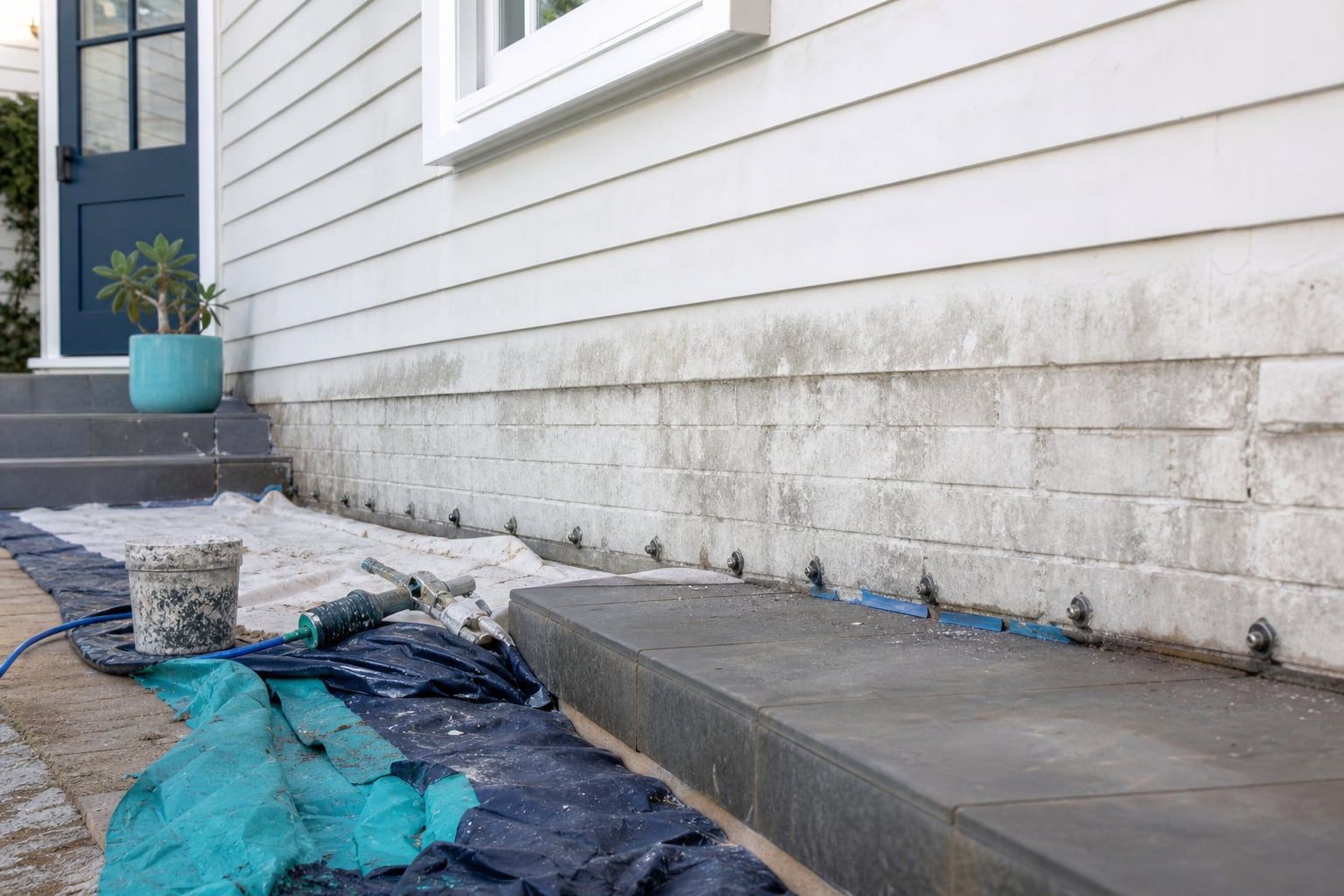
First we find the joint. The barrier has to sit below the floor level inside, and above the ground outside, or water simply bypasses it. On flat blocks near the beaches that is usually straightforward. On sloping blocks the ground level changes along the wall, so the joint may step down or the course may go in from inside on one side of the house and outside on the other.
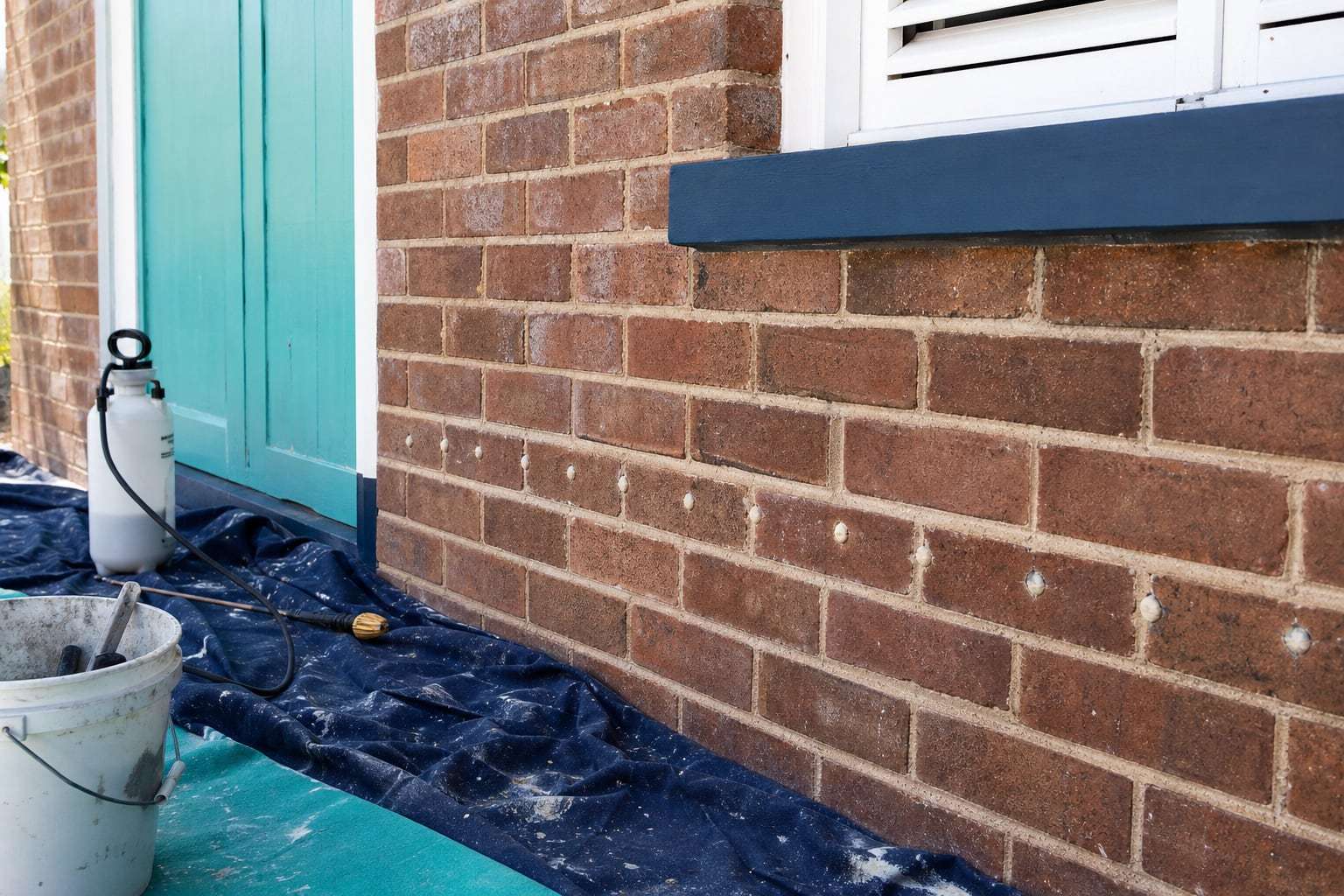
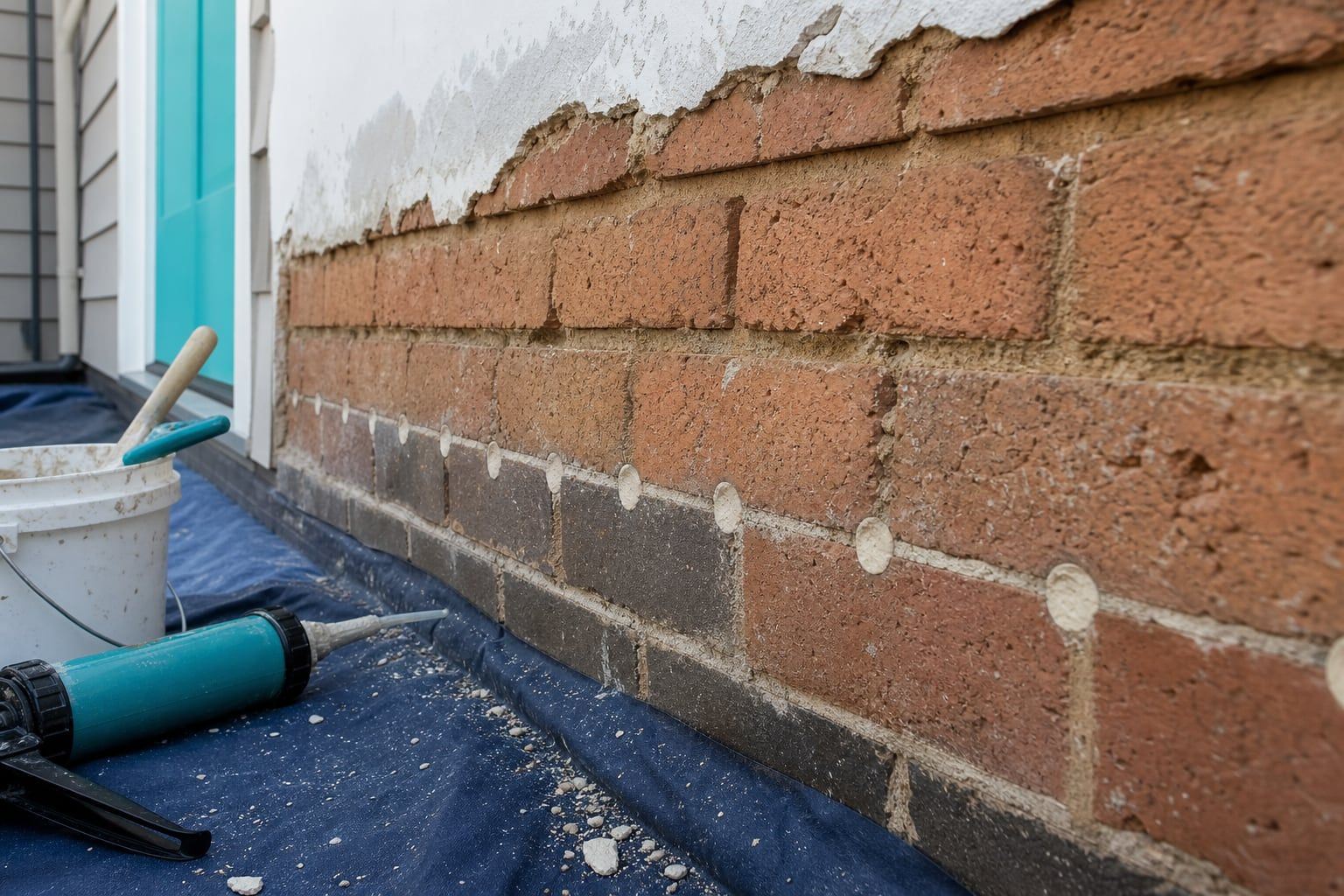
We drill a line of holes into the chosen joint at set spacing and depth. The depth depends on the wall: a single skin of brick is drilled most of the way through, and a double brick wall is either drilled deep enough to reach the inner leaf or treated from both sides. The cream is injected into each hole, then spreads through the mortar over the following weeks to form a continuous water-repellent band.
Holes are filled with a mortar coloured to match, so on face brick they’re hard to spot.
What happens to the wall above
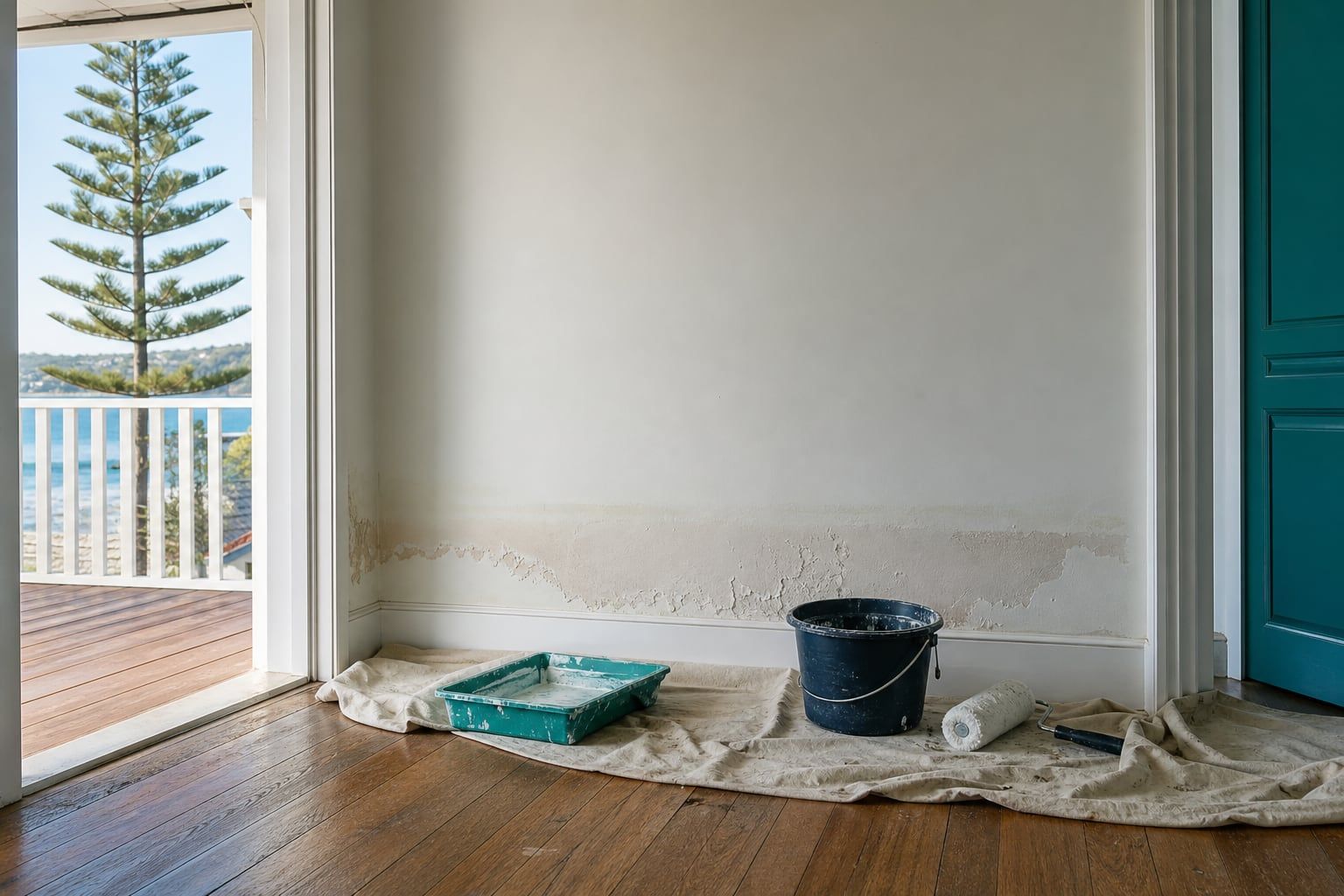
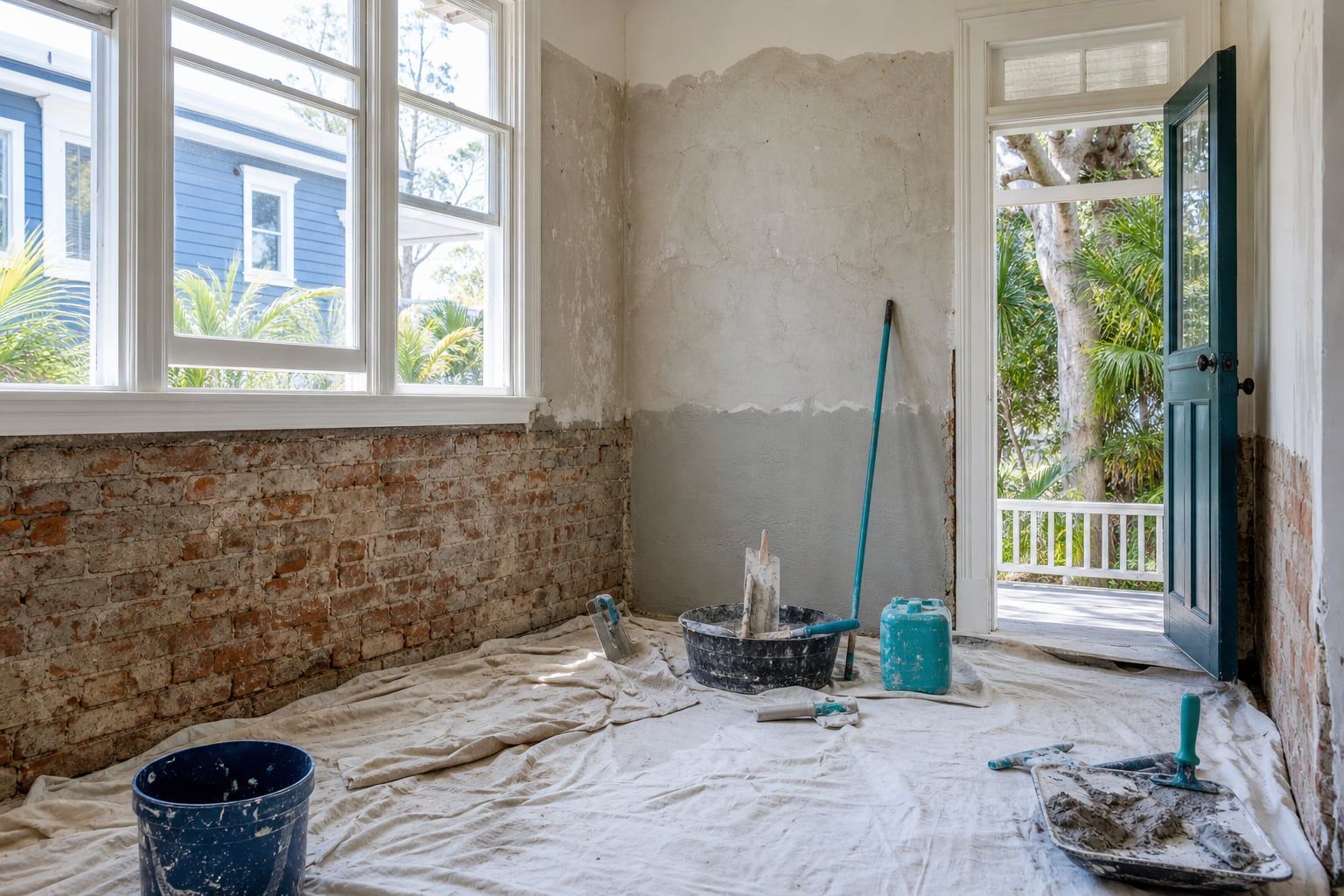
The wall above the new course is still wet and still full of salt. Plaster or render that has been sitting on salty brick for years will keep blistering even once the water stops, because the salt keeps drawing moisture from the air. That’s why every injection quote includes salt-resistant render for the damaged areas, applied once the masonry has dried enough.
How long that takes depends on the wall. A thin internal wall dries in weeks; a thick double brick wall in a shaded spot can take months. The render system is chosen so you can finish the room without waiting for the whole wall to dry right through.
A note on salt air
On houses close to the ocean, from Queenscliff to Palm Beach, salt carried in on the wind gets into exposed brickwork too. Those walls can read damp near the surface without any water rising from the ground. Injecting them wouldn’t help, so we test before we recommend anything. Our guide on salt air and damp walls explains how we tell the two apart.
The quote
You get a written quote that shows each wall, the metres to be injected, the side we’ll drill from and the area of render to be replaced. If we find something that changes the plan once the old render is off, we tell you before doing anything extra.
The injected course is usually one part of a wider rising damp treatment, and the quote shows how it fits with any drainage, ventilation or render work the house needs.
Updated
What good chemical damp course looks like
Chemical Damp Course across the Northern Beaches
Chemical Damp Course in the Northern Beaches: step by step
- Pick the jointWe find a continuous mortar bed as close to floor level as the wall allows, inside or out.
- DrillHoles go into that joint at set spacing and to a depth that suits the wall's thickness.
- InjectDamp-proofing cream is pumped in and spreads through the mortar to form a water-repellent band.
- Make goodHoles are filled to match and damaged render is replaced with a salt-tolerant system.
Chemical Damp Course guides for Northern Beaches homeowners
Chemical Damp Course questions in the Northern Beaches
Something else on your mind? Call and ask.
Will it work on my double brick house?
Yes, as long as both leaves are treated. On double brick we either drill deep enough to reach the inner leaf or inject both sides, and we check the cavity isn't bridged with mortar or rubble that would carry water across.
Do you drill from inside or outside?
Whichever side gives the lowest clean joint. On many Northern Beaches houses the outside is easier because the inside floor sits higher, but on sloping blocks the inside joint is often the better choice.
Is it messy?
The drilling makes dust, and removing old render is the messiest part. We cover floors and furniture, cut and strip in sections, and clean up each day.