Waterproof Tanking and Drainage Northern Beaches
Keep hillside water off the walls with drainage outside and waterproof tanking where soil sits against the house.
Waterproof tanking and drainage are often the most important part of damp work on the Northern Beaches, because so many houses are built into the hill. A rising damp barrier only stops water climbing up through the wall from the footing. When soil, rock or paving sits against the wall above that point, or groundwater runs down through the slope and presses against the house, the water comes in through the side of the wall instead.
Where this happens on the peninsula
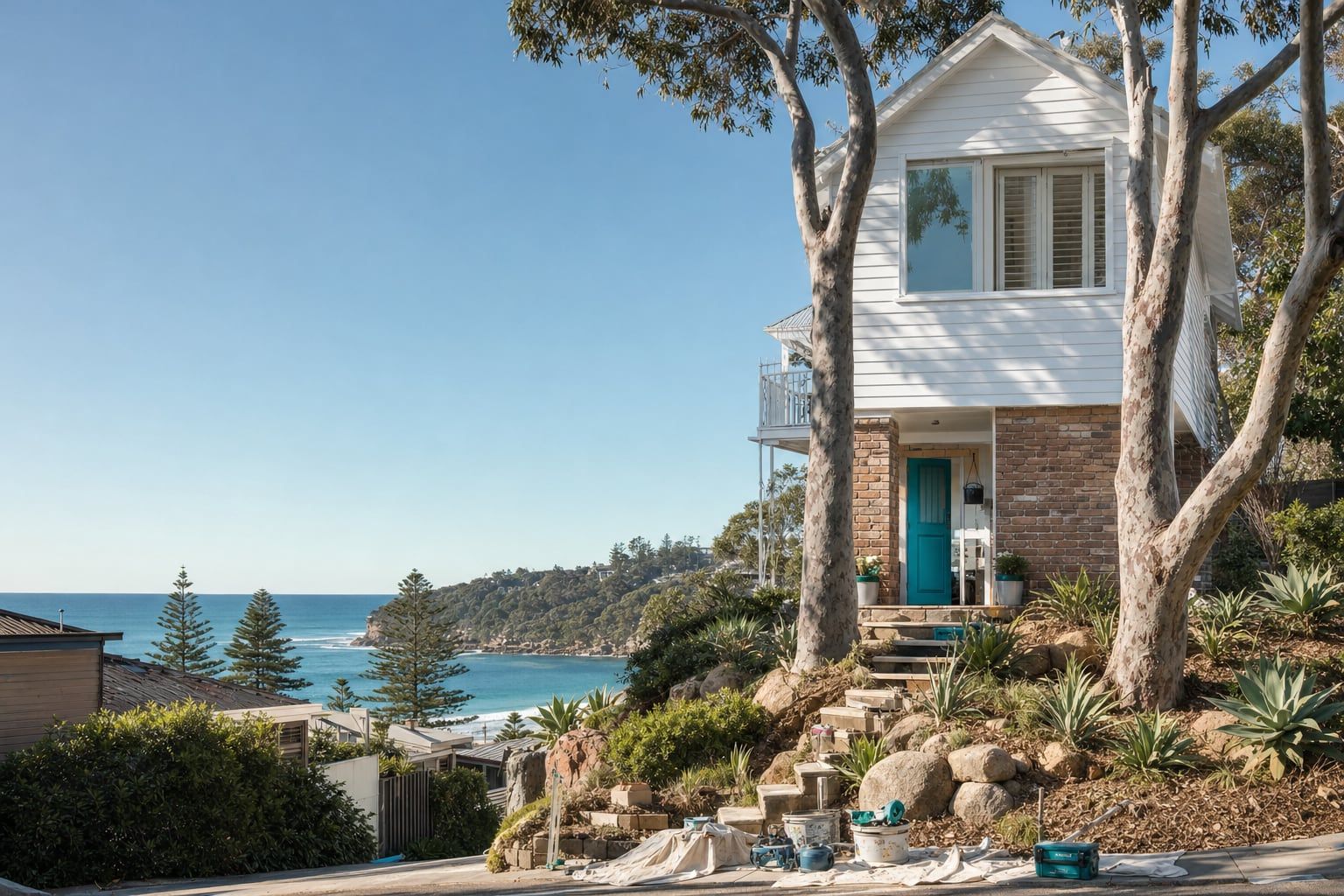
Look at the houses in Seaforth, Clontarf, Collaroy Plateau, Elanora Heights, Bilgola Plateau and the steeper streets behind Newport and Avalon. Many have a lower level dug into the hillside, or a back wall built against cut sandstone or clay. Others had a garage or rumpus room added underneath later, cut into the slope. After heavy rain, water moving down through the hill reaches those walls and soaks in.
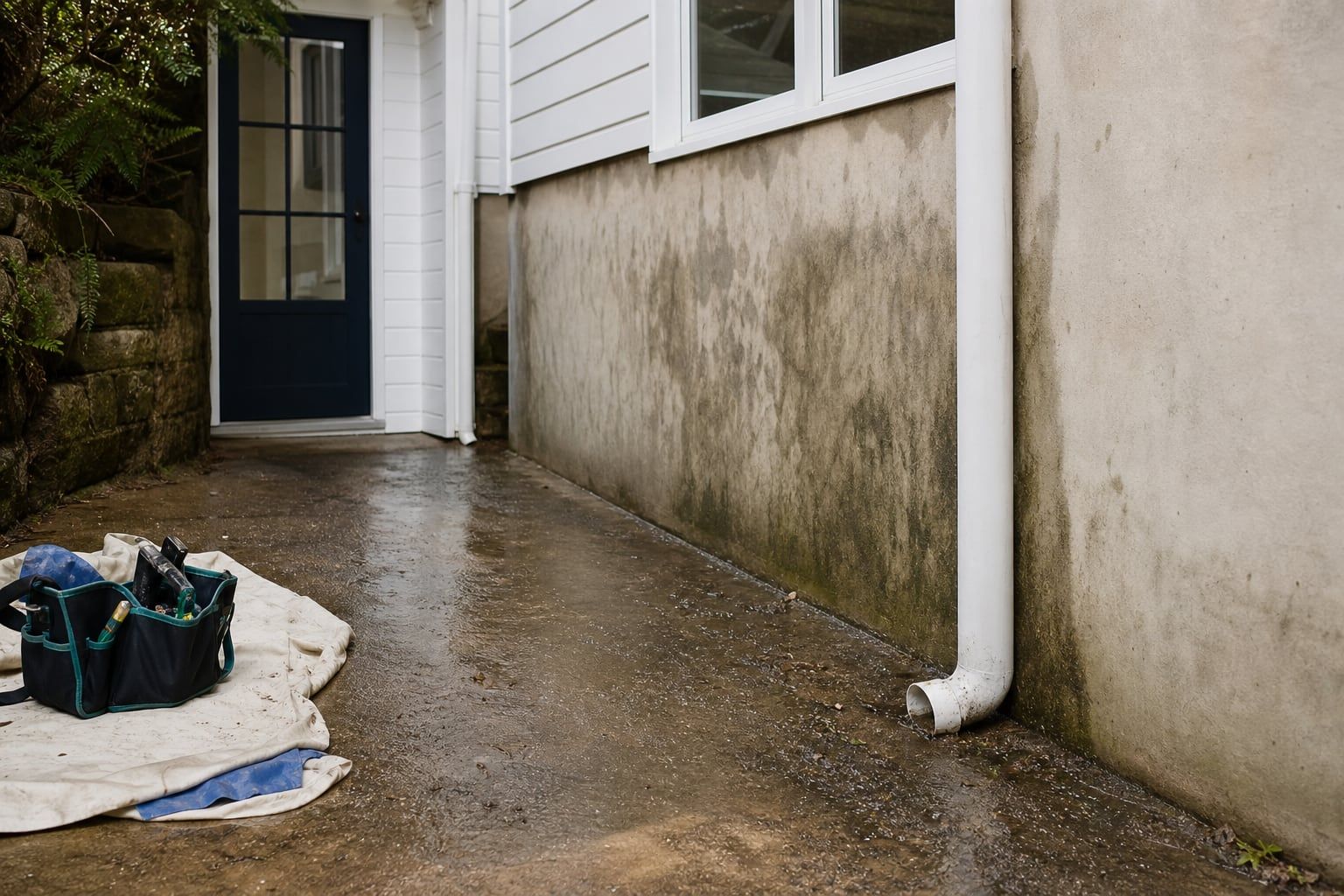
On flatter blocks the cause is usually simpler: a garden bed built up against the wall, a concrete path or courtyard poured above the damp course, or a driveway that slopes toward the house. Those put water against the wall above any barrier, and the fix is outside.
Drainage first
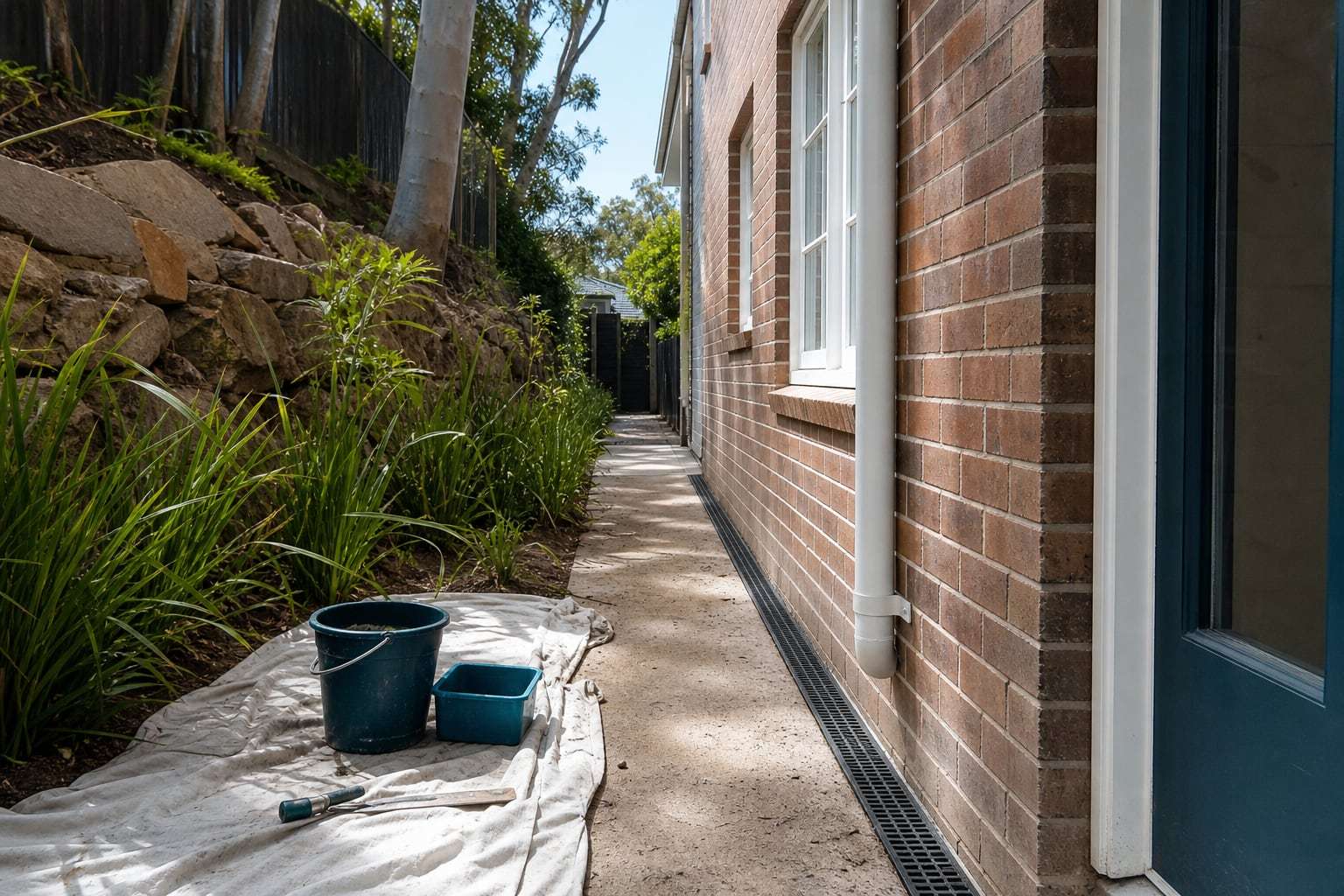
Wherever we can, we deal with water before it reaches the wall. That might mean lowering soil or paving so it sits below the damp course, regrading a path so water runs away, connecting downpipes to the stormwater, or installing an agricultural drain along the uphill side of the house to collect water moving through the ground and carry it away.
On sloping blocks, a drain on the uphill side can take most of the pressure off a below-ground wall. It’s often the single most effective fix for a damp lower level. Our guide on damp in hillside homes explains how water moves through Northern Beaches slopes and where drains go.
Tanking where the soil has to stay
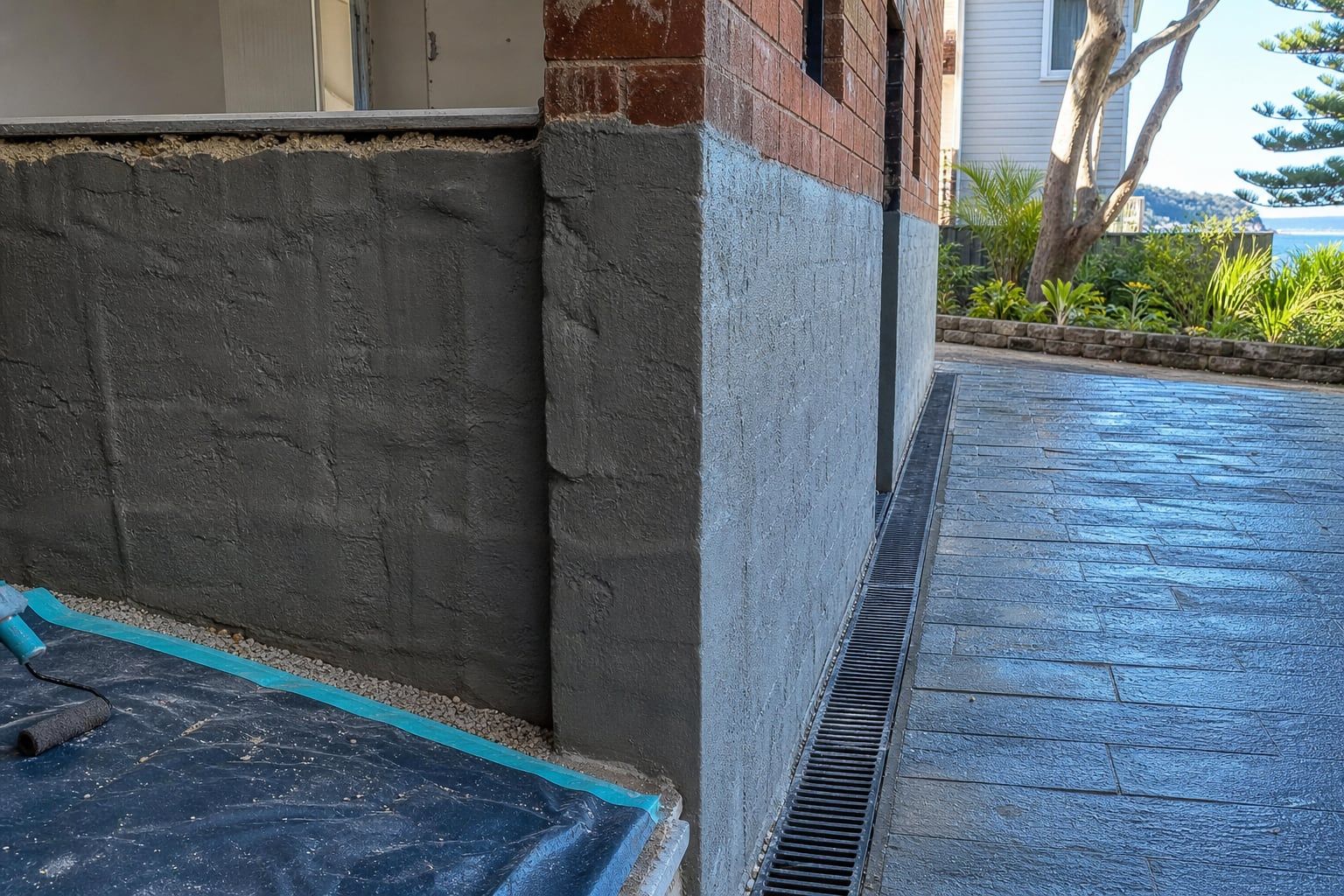
Some walls can’t be cleared. A room cut into sandstone, a wall against a neighbour’s retaining wall or a basement below ground level will always have something against it. For those we apply a tanking system to the inside face: a waterproof cementitious coating or membrane, built up in layers and taken around corners and onto the floor so there are no weak points.
Once the tanking is cured it’s protected with render or a lining, so the room can be finished and used normally.
How it combines with other work
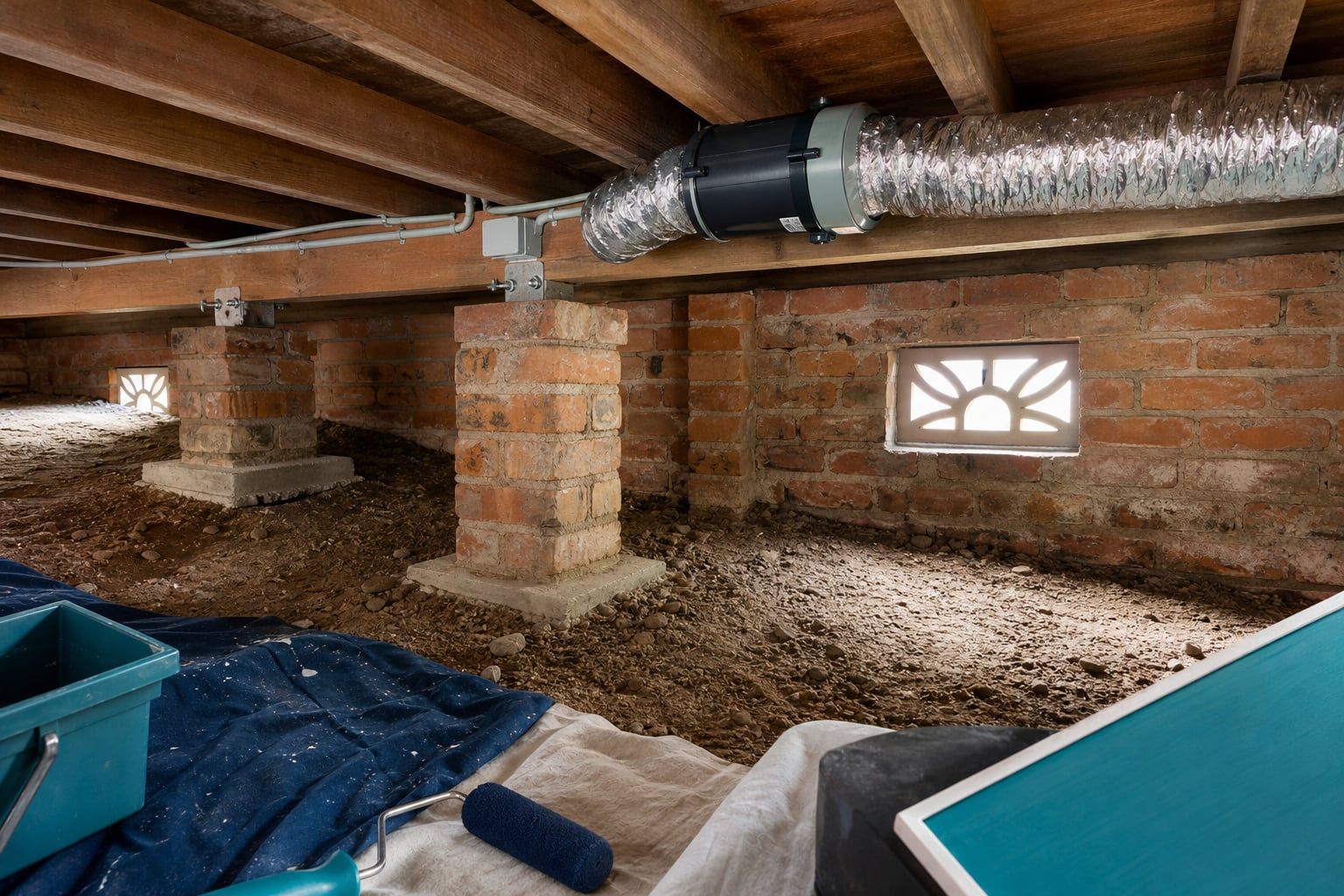
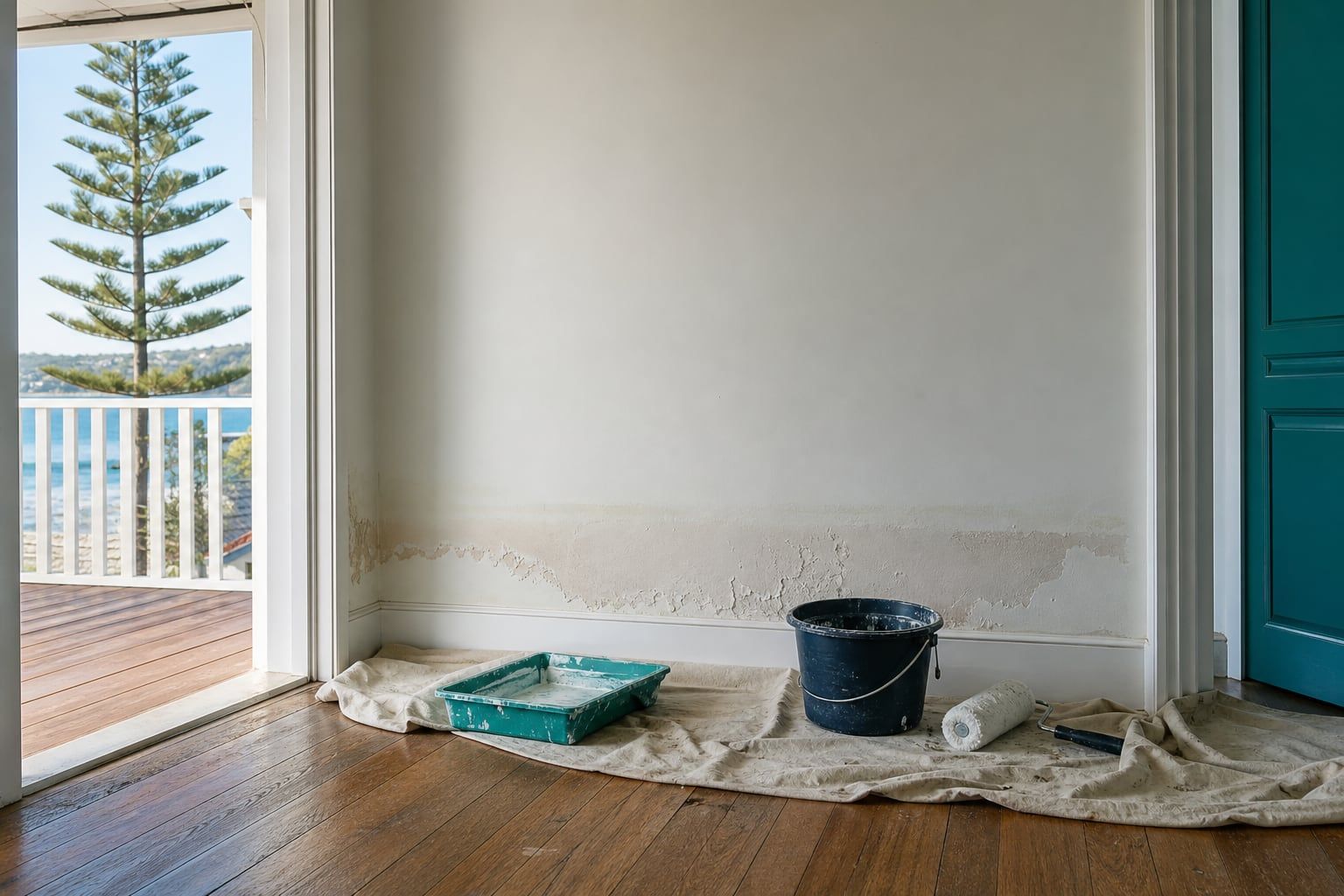
Tanking and drainage often sit alongside other fixes. A house with a below-ground back wall might also have rising damp in its internal walls, which needs a chemical damp course. Water running under the house from the slope can soak the subfloor, which needs subfloor ventilation as well. And the internal finish usually needs replacing with salt-damaged plaster repair once the water has stopped.
Reading the wall first
We don’t assume a damp lower-level wall needs tanking. Readings tell us whether the wall is wet at the base all along, which points to rising damp, or wettest on the uphill side and worse after rain, which points to water moving through the slope. Getting that right decides whether you need a damp course, drainage, tanking or a mix.
Every quote sets out what’s going outside, what’s going on the wall and why. It usually forms part of a wider rising damp treatment plan for the house.
Updated
What good waterproof tanking and drainage looks like
Waterproof Tanking and Drainage across the Northern Beaches
Waterproof Tanking and Drainage in the Northern Beaches: step by step
- Trace the waterWe check where water enters the block, how it moves through the ground and which walls it reaches.
- Lower or drain outsideWhere possible, soil is lowered or a drain is installed to carry water away from the wall.
- Tank insideWhere soil or rock must stay against the wall, a waterproof tanking system is applied to the inside face.
- FinishThe tanked wall is rendered or lined so the room is usable and the waterproofing stays protected.
Waterproof Tanking and Drainage guides for Northern Beaches homeowners
Waterproof Tanking and Drainage questions in the Northern Beaches
Something else on your mind? Call and ask.
What is tanking?
Tanking is a waterproof coating or membrane applied to a wall that has soil, rock or water pressing against it. It stops water coming through the wall rather than up from the base, which a damp course can't do.
Should drainage go in before tanking?
Where access allows, yes. Taking water away from the wall outside reduces the pressure on the tanking and helps it last. On tight blocks where the outside can't be reached, tanking the inside face is the practical option.
Can a downstairs room dug into the hill be made dry?
Usually, yes. Those rooms are common on the Northern Beaches, and with drainage on the uphill side and tanking on the walls below ground level they can be made dry enough to use as bedrooms or living space.