Physical Damp Course Northern Beaches
A solid membrane put into the wall in short sections, for walls an injected barrier can't seal.
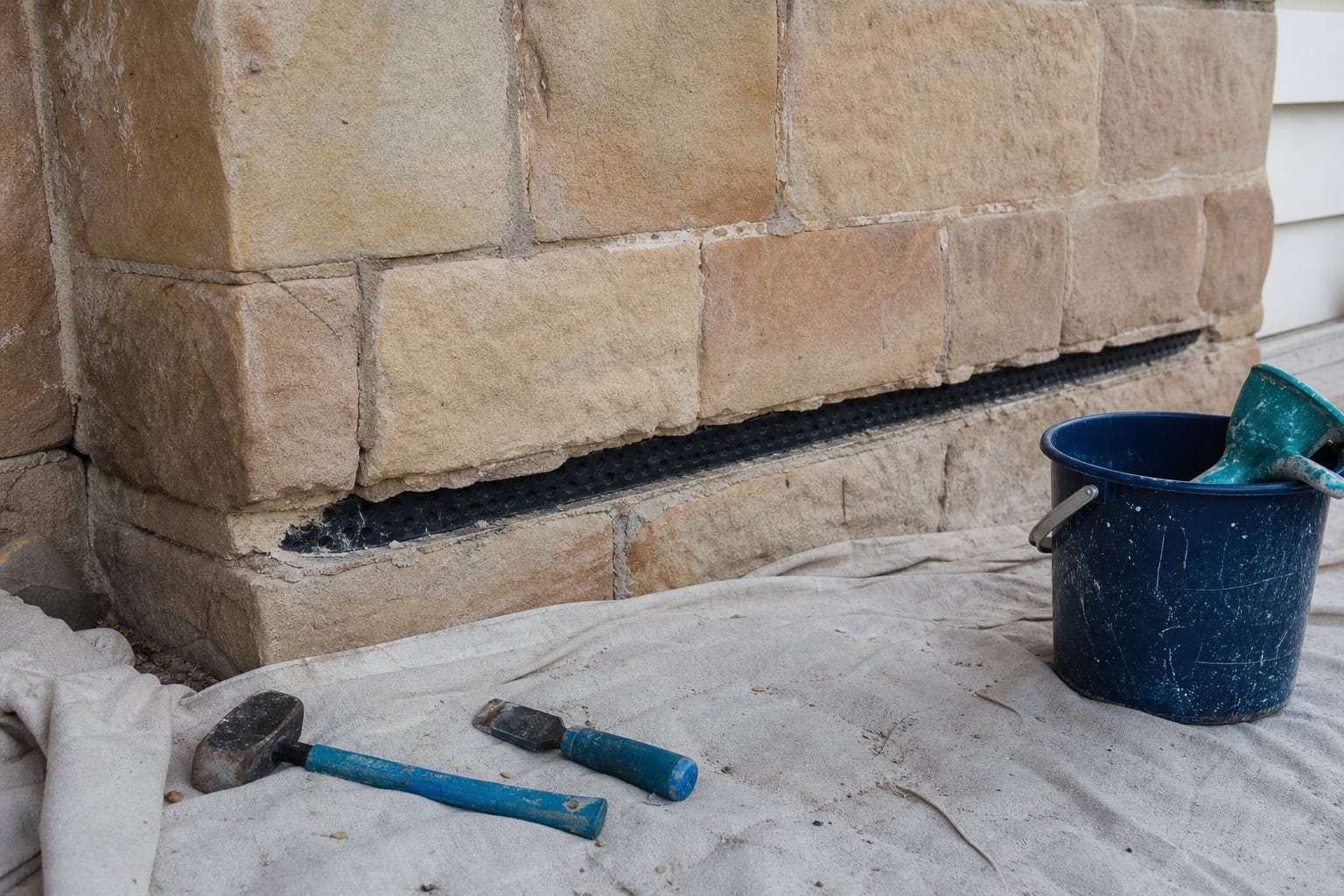
A physical damp course puts a solid membrane into the wall rather than relying on a cream to soak through it. On the Northern Beaches we use it mostly on sandstone footings, rubble walls and soft early bricks, where an injected barrier can’t be relied on to form a continuous seal.
Which walls need a physical course
The older parts of the peninsula have plenty of them. Some of the early houses in Manly and Fairlight sit on sandstone footings cut from the local rock. Cottages in Narrabeen, Newport and Avalon from the early twentieth century sometimes have stone or rubble bases under brick or weatherboard. And some early bricks were fired soft enough that they absorb cream unevenly or crumble when drilled.
In all of these, a chemical barrier struggles. Sandstone varies block to block, rubble walls are full of voids, and soft brick can let the cream run away from the joint. A membrane doesn’t care what the wall is made of; it physically separates the wall above from the wet footing below.
How it goes in
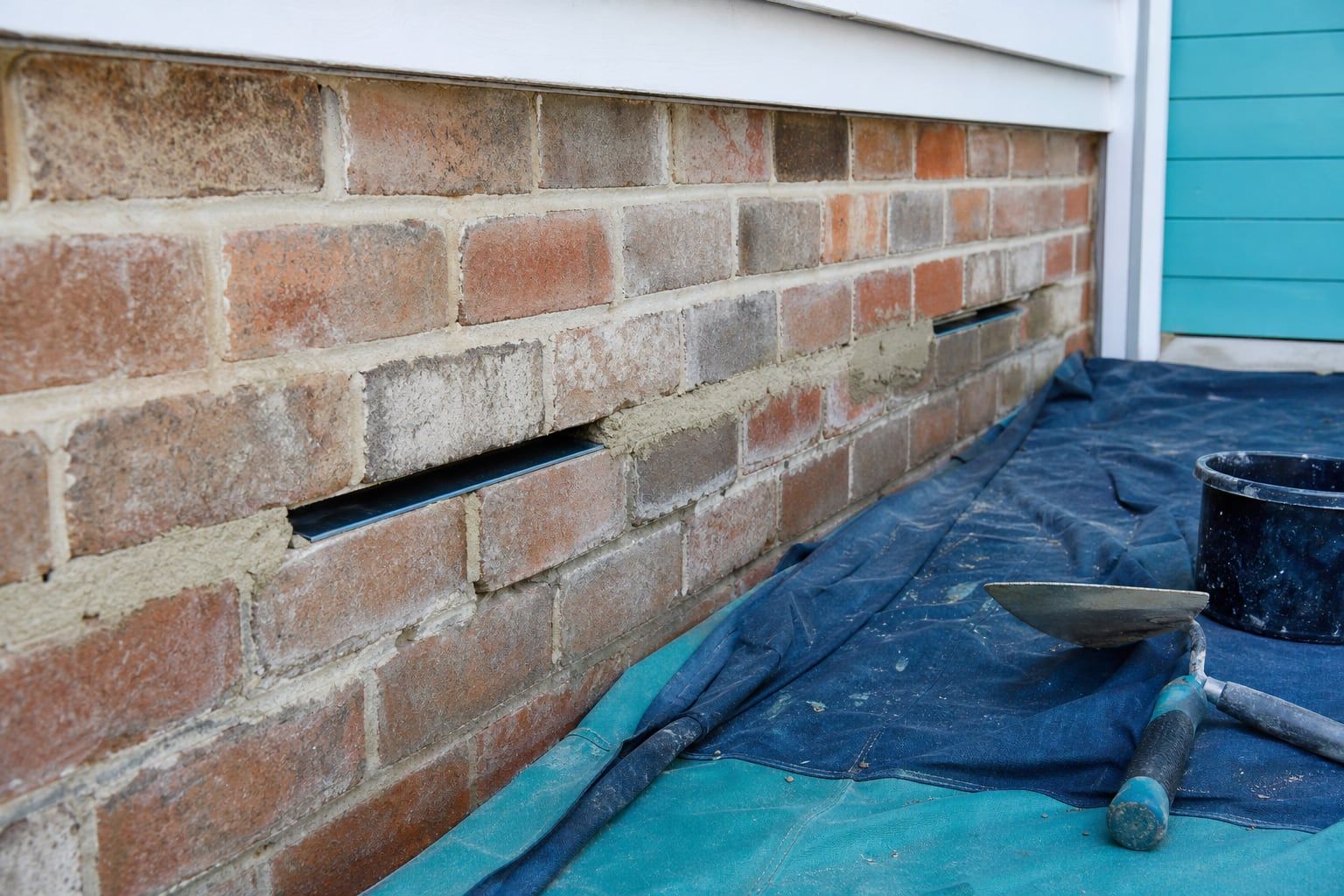
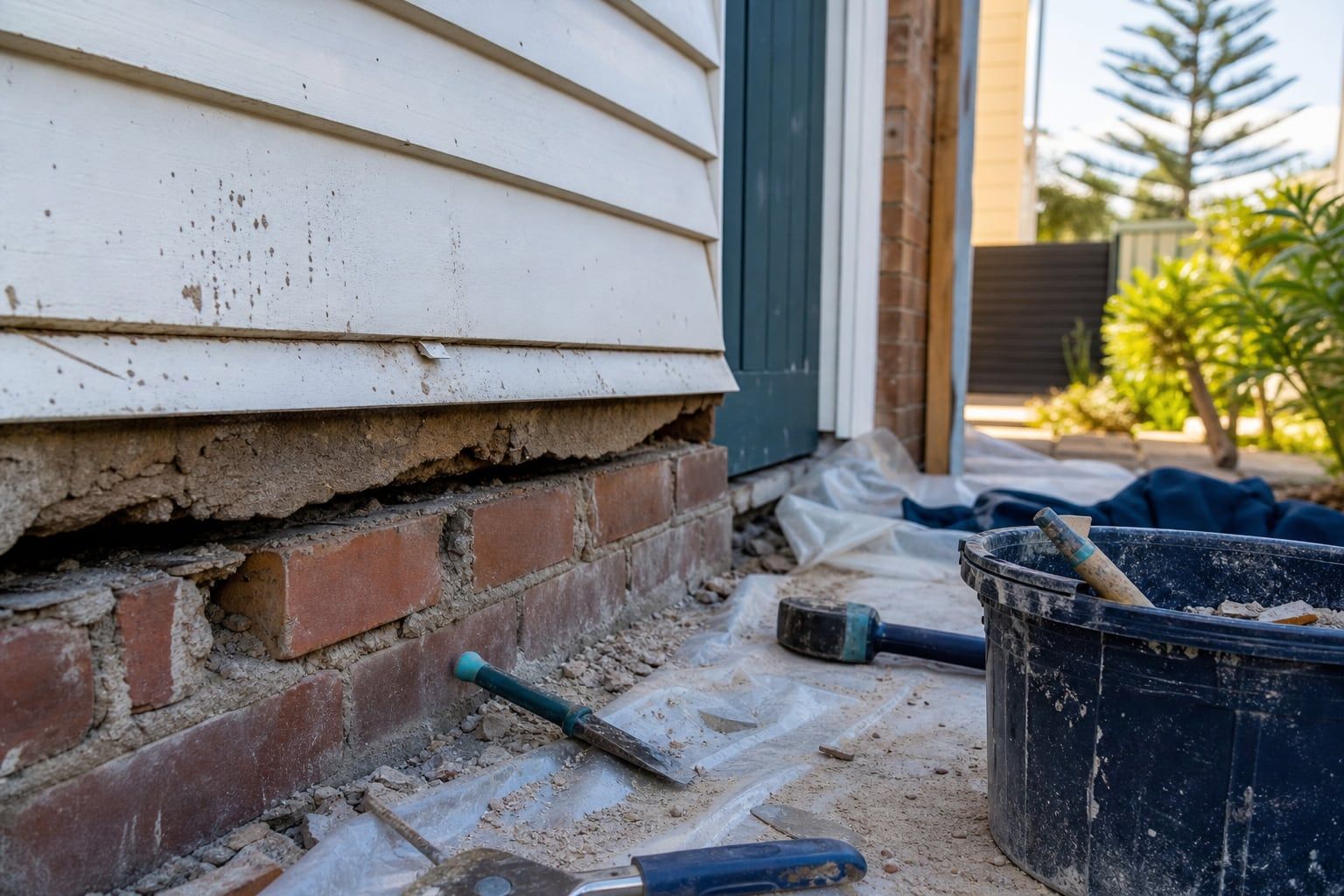
The work is done in short sections so the wall is always supported. We cut out or rake out a length of the wall at the chosen height, slide in a damp-proof membrane, then pack the gap solid with mortar or slate wedges. Only when that section is fully packed do we move to the next one, overlapping the membrane so there are no gaps.
Height matters as much as method. The membrane has to sit above the outside ground and below the inside floor. On a sloping block that can mean the course steps down along the wall, which we plan before cutting anything.
On stone, we use lime-based mortar to repack the joints. It’s softer than cement mortar, so the stone stays the hardest part of the wall and any future movement shows in the joint rather than cracking the stone.
What else stone walls need
Sandstone holds a lot of water and gives it up slowly, so the wall above a new physical course takes longer to dry than brick does. We plan the finish around that. Damaged render comes off and a breathable, salt-tolerant system goes back on, so the stone can keep drying through the surface rather than trapping moisture behind a sealed coat.
Stone houses on the escarpment often have a second problem: water running through the hill and against the back wall. A physical course stops water rising, but not water pushing in from the side. Our guide on damp in hillside homes explains how we deal with that, usually with drainage or waterproof tanking on the uphill side.
Brick walls that need it too
Not every physical course goes into stone. Some brick walls have mortar so broken down that there’s no sound joint to inject into, or they’ve been injected before with no result. In those cases a membrane is the more reliable choice. Where brick is in good condition, a chemical damp course is quicker and does the same job.
Before and after
Every job starts with readings, so we know the wall really has rising damp before we cut into it. After the course is in, we replace the damaged finish with salt-damaged plaster repair made for masonry that’s still drying out.
A physical course is often part of a wider rising damp treatment that also covers drainage and airflow. The written quote sets out every part, wall by wall, before we start.
Updated
What good physical damp course looks like
Physical Damp Course across the Northern Beaches
Physical Damp Course in the Northern Beaches: step by step
- Assess the wallWe confirm the wall material and pick the course height relative to the floor and the ground.
- Cut a sectionA short length of the wall base is cut or the joint is raked out, never enough at once to weaken it.
- Insert the membraneA damp-proof membrane goes in with lapped joints, then the gap is packed solid.
- Move alongThe next section is done only once the last is packed, until the wall is complete.
Physical Damp Course guides for Northern Beaches homeowners
Physical Damp Course questions in the Northern Beaches
Something else on your mind? Call and ask.
Is it safe to cut into a load-bearing wall?
Yes, when it's done in short sections. Only a small length is open at any time, and each section is packed solid before the next one is cut, so the wall above is always supported.
Why not just inject a sandstone wall?
Sandstone is too variable. Some blocks soak cream up, others barely take it, and rubble walls have voids that let it run away. A physical membrane gives a continuous barrier regardless of what the wall is made of.
Does it suit heritage houses?
It's often the preferred method for older masonry because it doesn't rely on chemicals soaking into original stone, and the finish can be repaired with lime-compatible mortar and render.