Salt-Damaged Plaster Repair Northern Beaches
Take off the finish the salt has ruined and put back one built for walls that are still drying.
Salt-damaged plaster repair is the part of a damp job you’ll see every day afterwards. When water has been rising through a wall, or soaking in from the side, it carries salts out of the ground and the masonry. As the water evaporates from the surface, the salt is left behind in the plaster or render. On the Northern Beaches, walls near the ocean collect salt from the air as well.
That salt doesn’t go away when the water stops. It keeps pulling moisture out of the air, so the finish stays damp on humid days and the paint keeps blistering. That’s why a damp course or drainage fix alone won’t leave you with a sound wall.
What salt damage looks like
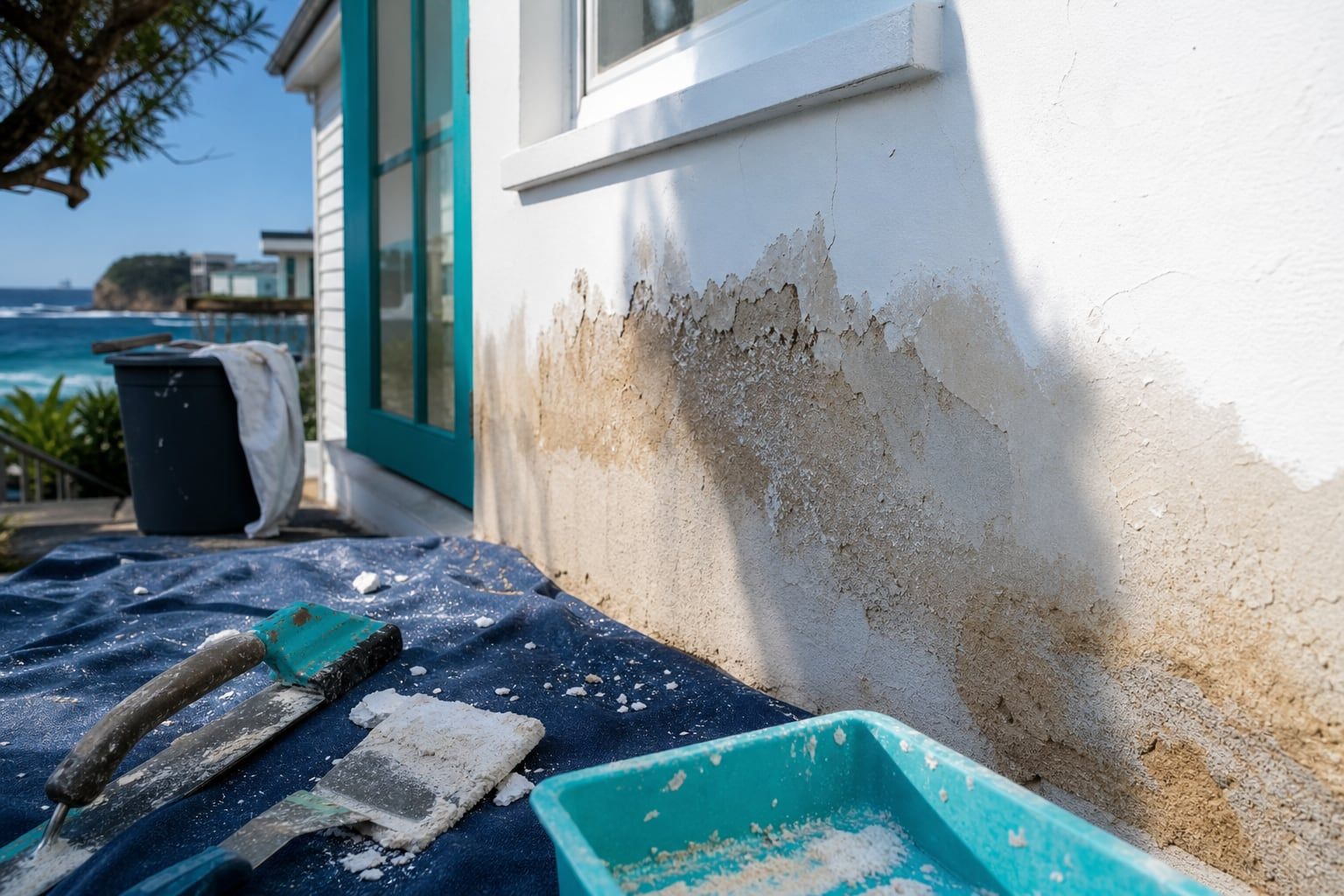
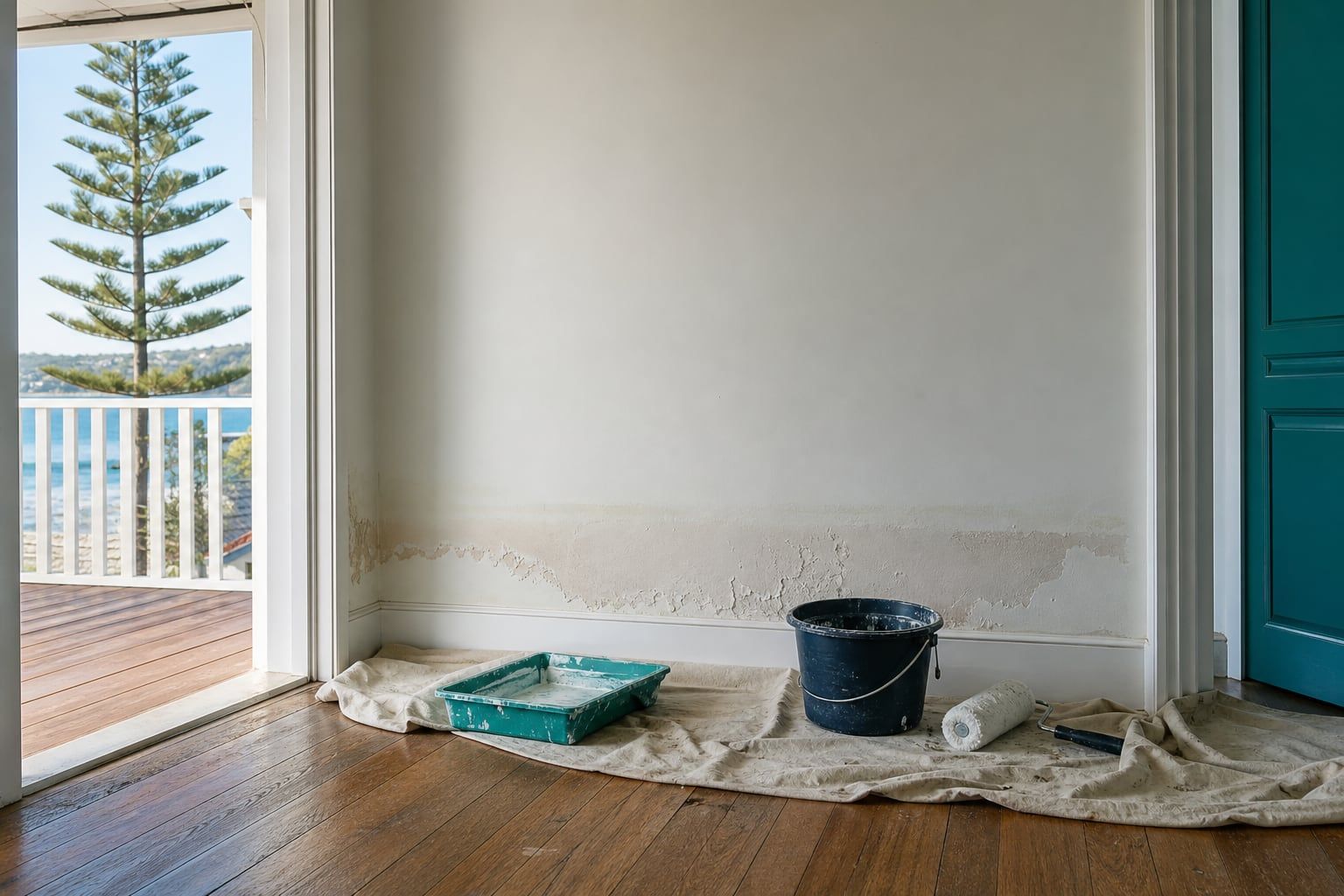
Look low on the wall. White fluffy crystals on the surface, paint lifting in blisters, plaster that crumbles or sounds hollow when tapped, and a tide mark where the damage stops are all classic signs. On external render, salt shows as powdery patches and render that flakes away in sheets. Inside, skirting boards fixed to salty plaster often rot from behind.
Our page on rising damp symptoms shows these in more detail, along with the signs that point to other causes.
How we repair it
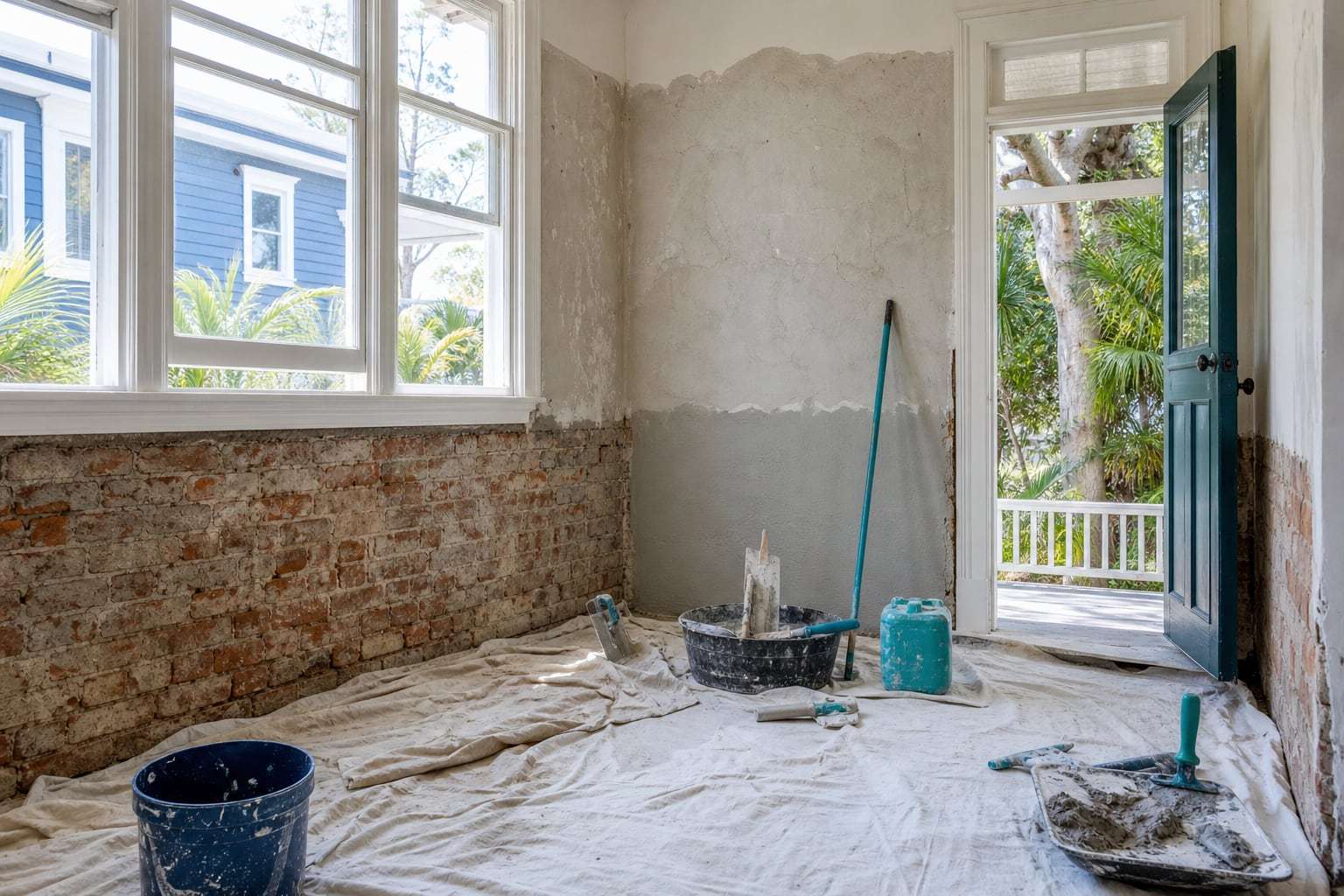
First we work out how far the salt has gone. It usually travels higher than the visible damage, so we test above the tide mark before deciding where to strip. Then we remove all the salt-loaded plaster or render back to sound masonry, cutting a clean line well above the highest salty point.
The bare wall is left to dry for a period that suits its thickness and material. A thin brick internal wall dries much faster than a thick stone base or a double brick outer wall. We don’t render straight over a wall that’s still wet.
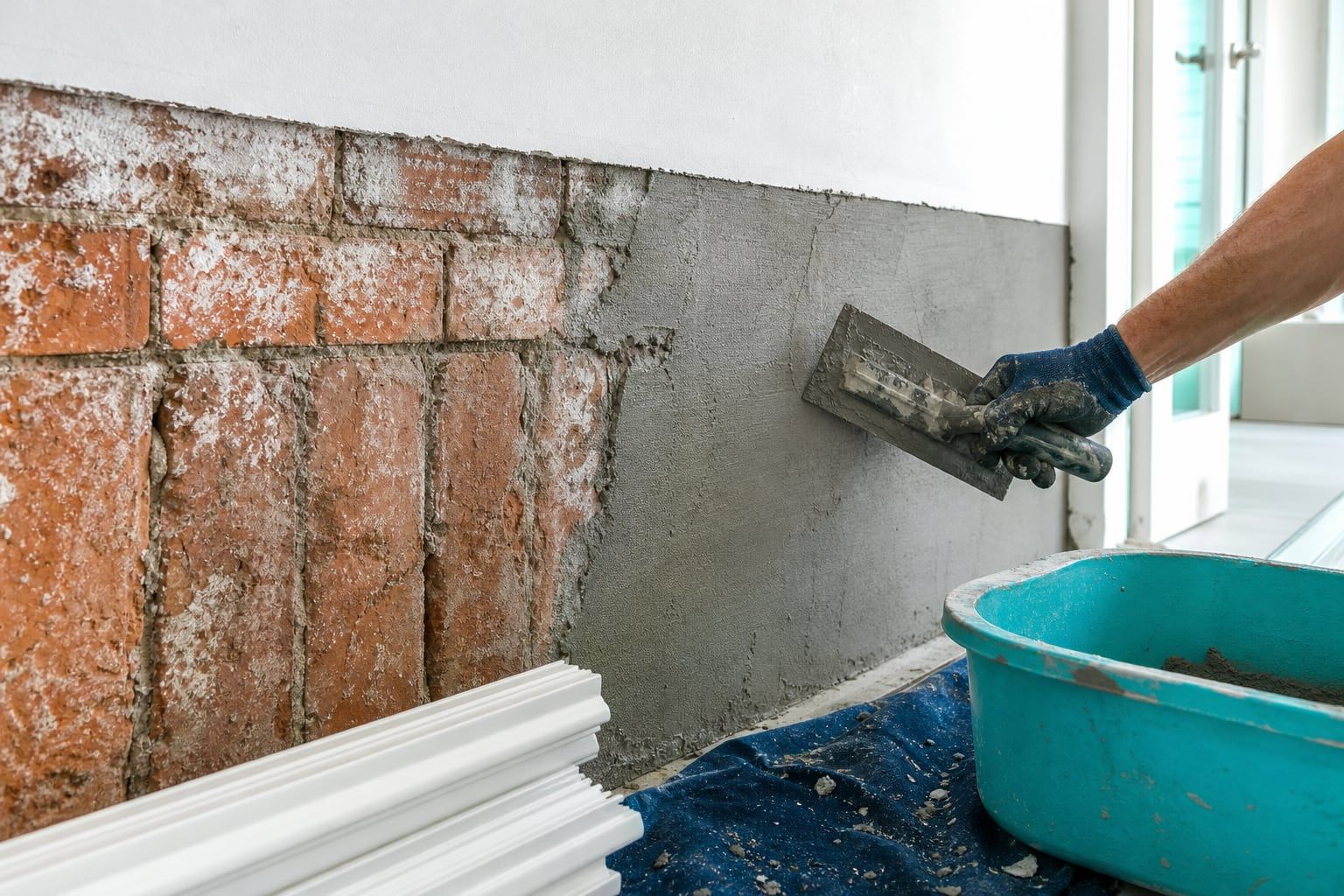
The new finish is a salt-tolerant render system: a breathable mix designed to let the wall keep drying while holding any remaining salt within the render rather than at the paint surface. It’s finished smooth or to match your existing texture, ready for paint.
Sequence matters
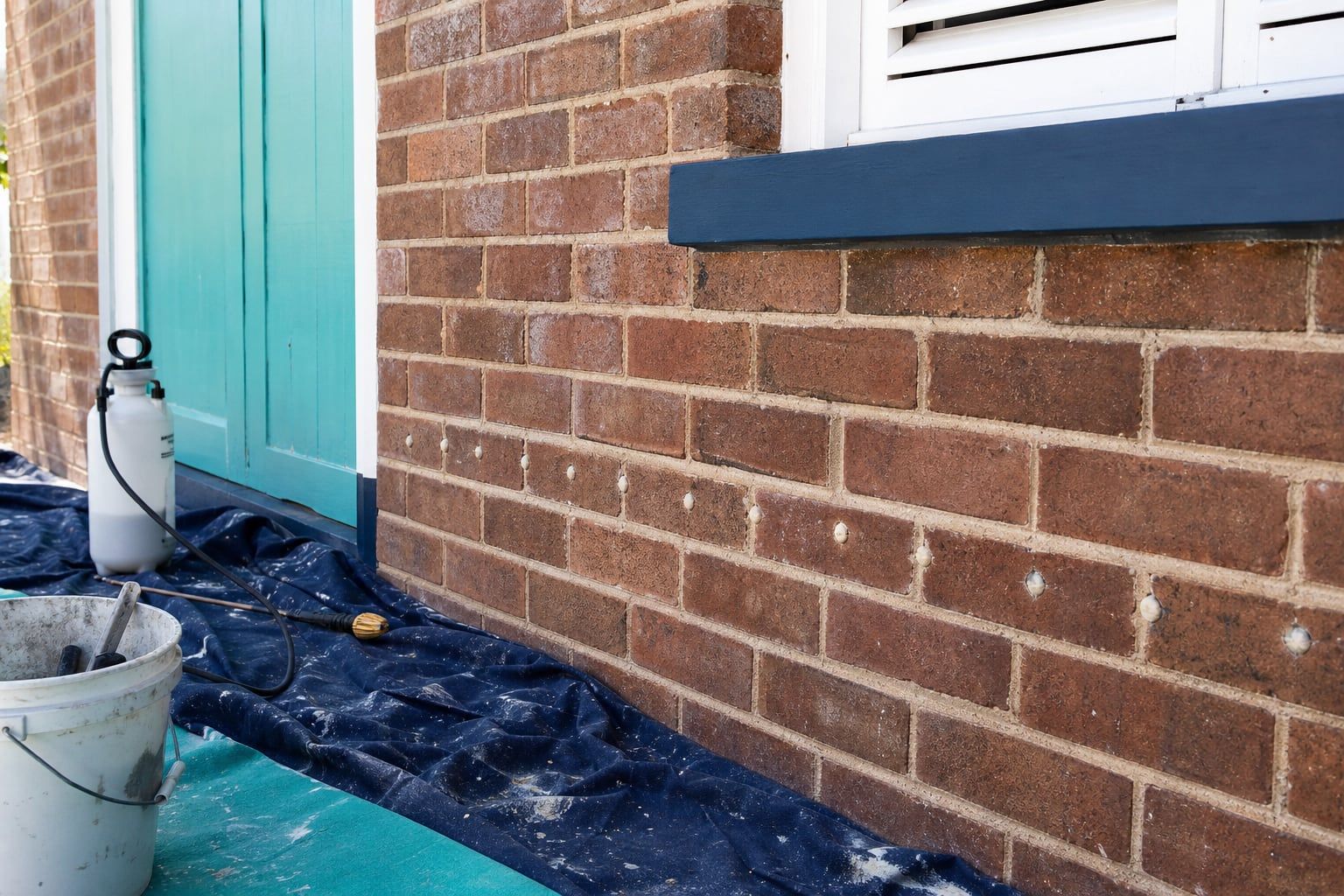
Plaster repair always comes after the cause is fixed. If the water is still coming in, new render will fail just like the old one. So every repair we do follows a chemical damp course, a physical damp course, drainage, subfloor ventilation or whatever the readings showed the wall needed.
Coastal walls
On houses close to the beaches, salt carried in on the wind settles on exposed walls and works into the render. Those walls can show salt damage high up, on the side facing the ocean, without any rising damp at all. Our guide on salt air and damp walls explains how we tell coastal salt from rising damp salt, and why it changes the repair.
Finishing the room
Rotted skirtings are replaced, power points and fittings removed for the work are put back, and we tell you when the new render is ready for paint. On older houses with lime plaster we can use lime-compatible finishes so the new work behaves like the old.
The repair is part of every rising damp treatment quote we write, priced wall by wall.
Updated
What good salt-damaged plaster repair looks like
Salt-Damaged Plaster Repair across the Northern Beaches
Salt-Damaged Plaster Repair in the Northern Beaches: step by step
- Mark the damageWe test and mark how far the salt has travelled, which is usually higher than the visible damage.
- Strip backSalt-loaded plaster or render is removed to sound masonry, past the highest salty point.
- Let it dryThe bare wall is given time to dry out after the damp course or drainage work.
- RenderA salt-tolerant, breathable render system goes on, finished smooth and ready for paint.
Salt-Damaged Plaster Repair guides for Northern Beaches homeowners
Salt-Damaged Plaster Repair questions in the Northern Beaches
Something else on your mind? Call and ask.
Why can't I just patch and repaint?
The salt is still in the plaster. It draws moisture out of the air and crystallises under the paint, so a patched wall blisters again within months. The salty material has to come off.
How high do you strip?
At least as high as the salt has travelled, plus a margin. Salt often sits above the visible tide mark, so we test before deciding where to stop.
Can you match my existing finish?
We can finish to a smooth set or match a textured render, and on older houses we can use lime-based finishes that suit the original wall.