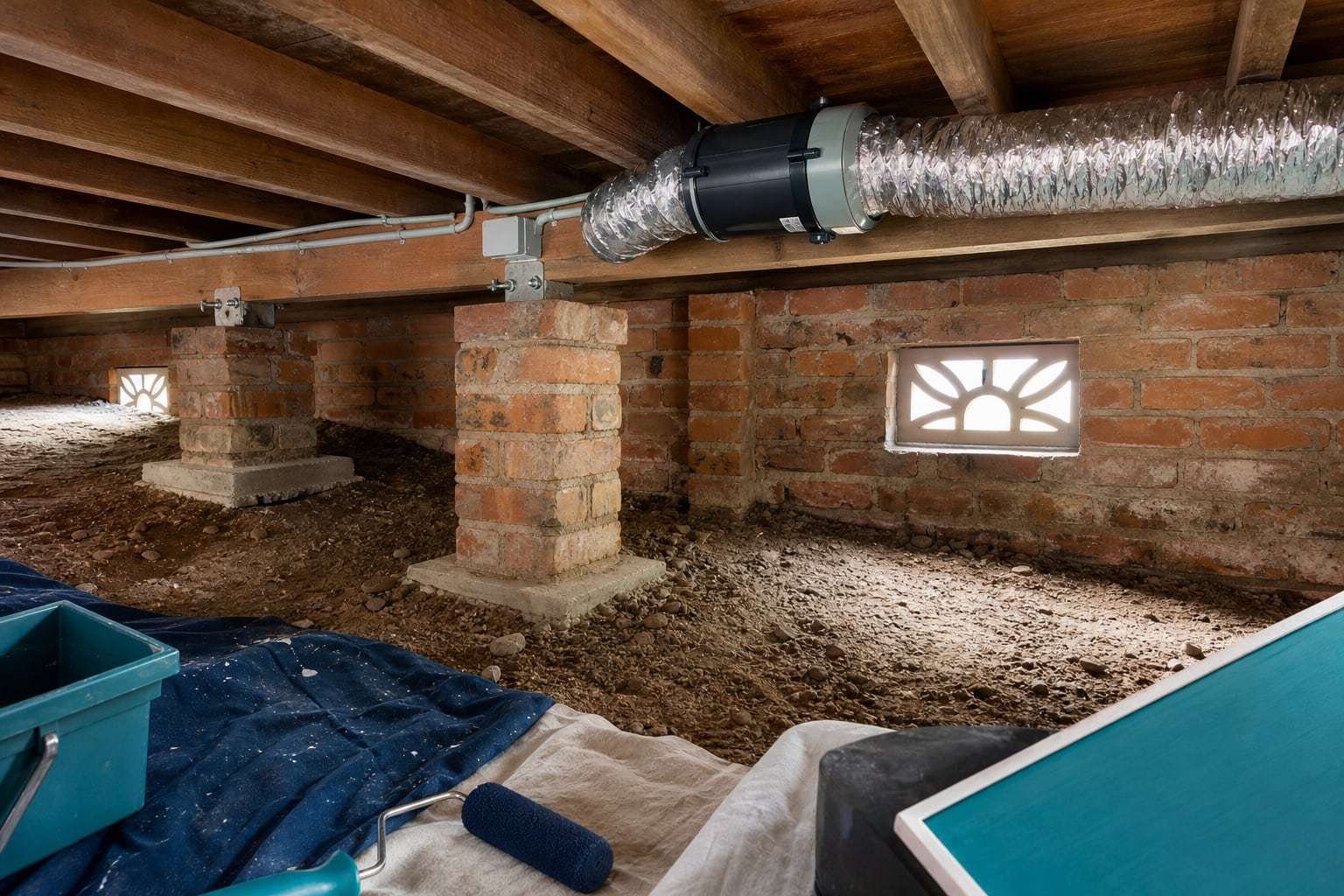
Subfloor Ventilation Northern Beaches
Dry the space under the floor so the timbers, the walls and the rooms above stop staying damp.
Subfloor ventilation matters on the Northern Beaches because so many houses sit off the ground on piers. Beach cottages in Narrabeen, Collaroy and Avalon, inter-war bungalows in Freshwater and Brookvale, and plenty of later houses on sloping blocks all have a crawl space under a timber floor. When air can’t move through that space, moisture from the ground builds up and keeps the floor, the bearers and the base of the walls damp.
Signs your subfloor needs airflow
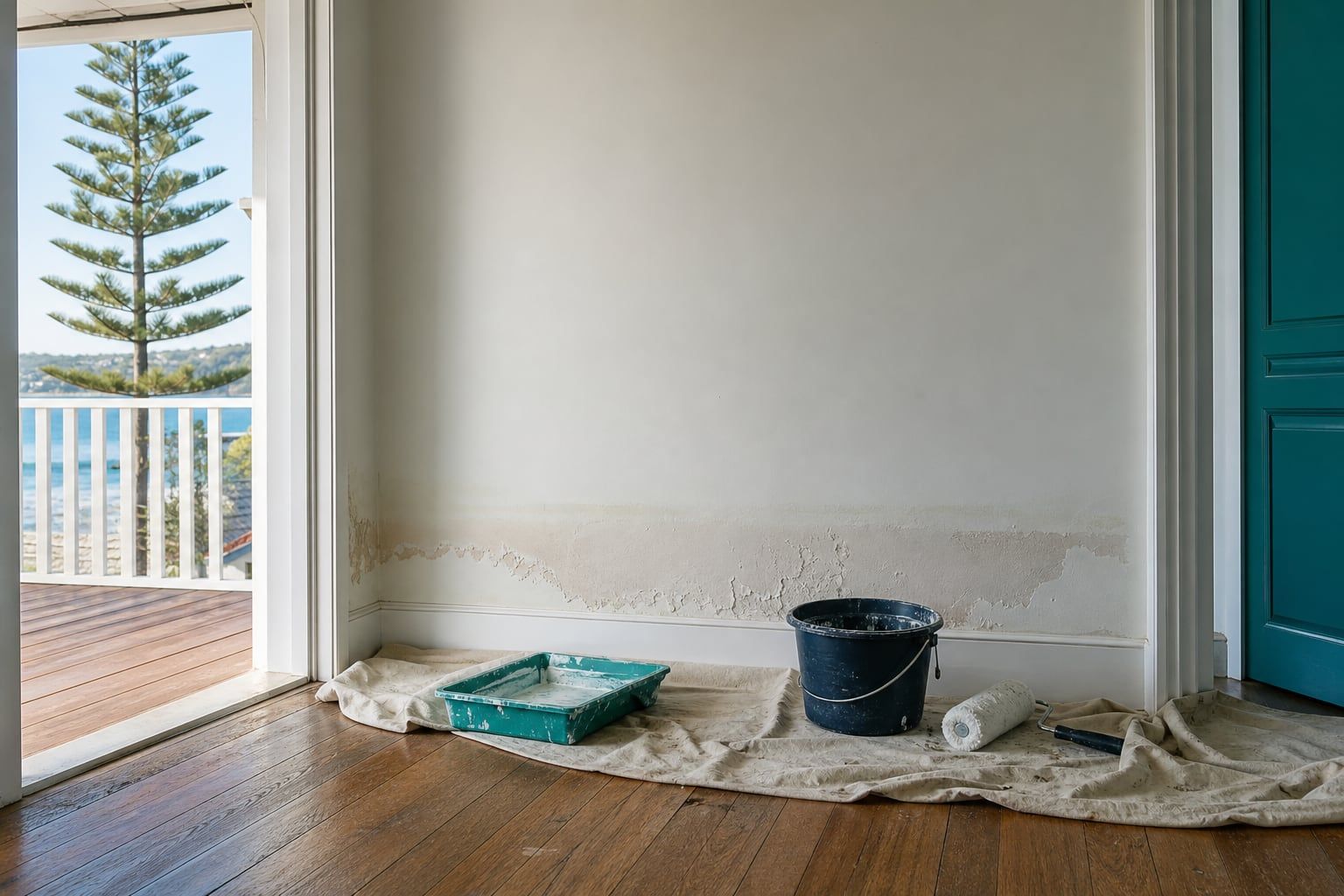
Inside, the clues are a musty smell that’s worse in winter, floorboards that cup or feel soft, mould on the backs of cupboards or behind furniture against outside walls, and damp along the bottom of walls that doesn’t fit a rising damp pattern. Outside, look at the vents: on many older houses they’ve been painted over, buried behind garden beds, covered by decks or blocked by later extensions.
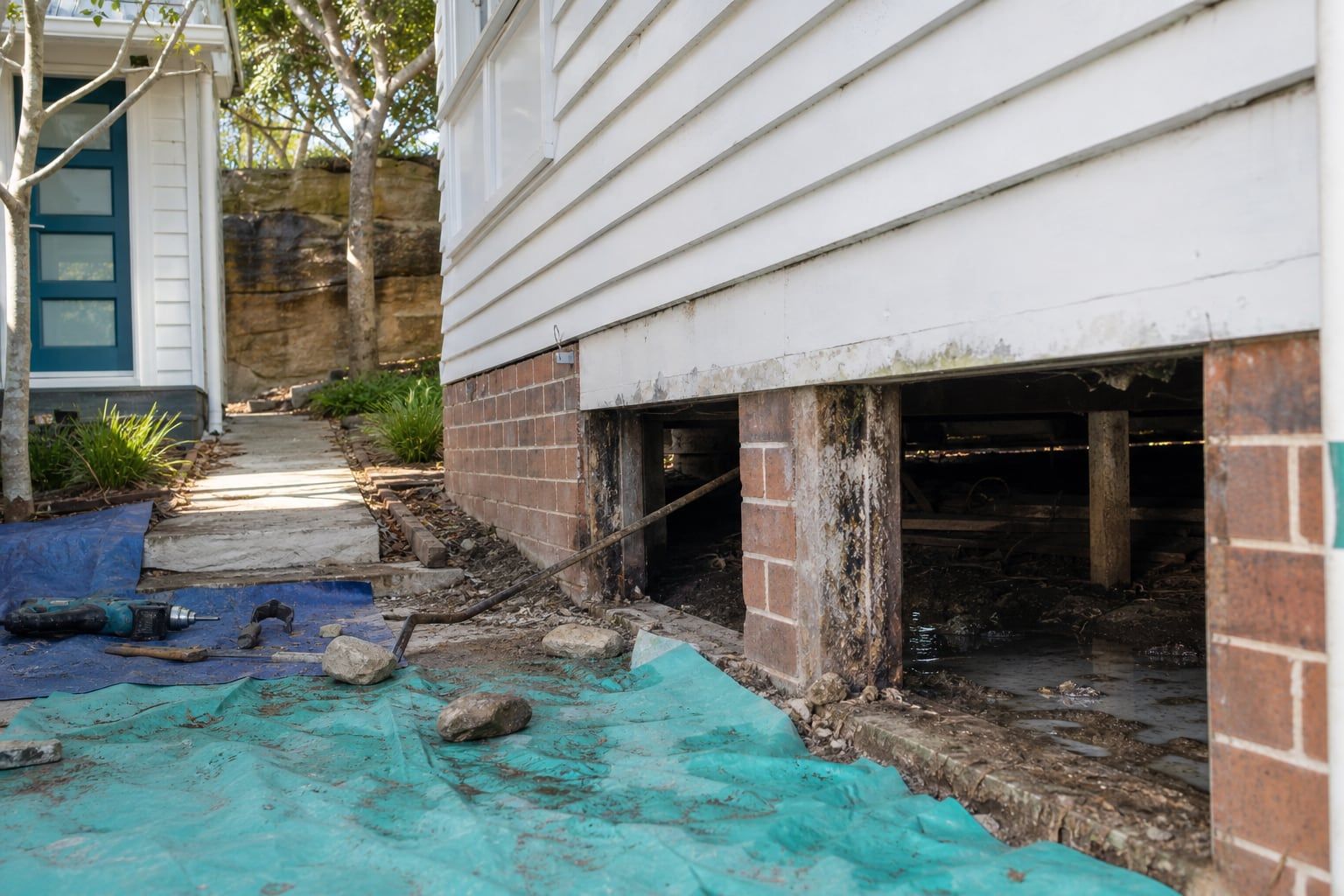
Under the house, a damp subfloor shows as wet or dark soil, white or grey mould on timbers, rust on fixings and a damp smell. We measure the timber moisture content, because that tells us whether the bearers and joists are at risk of rot.
Water first, air second
Ventilation won’t dry a subfloor that’s still getting wet. So we check the water sources before anything else: downpipes that discharge under the house instead of into a drain, leaking pipes, a garden bed or slope directing stormwater under the floor, or a broken drain soaking the ground. On hillside blocks across Elanora Heights, Belrose and Allambie Heights, water often runs straight under the uphill side of the house after rain.
Fixing that first can make a bigger difference than any fan. Our guide on damp in hillside homes explains more about water moving through sloping blocks.
How we get air moving
Air needs to come in on one side and leave on the other. We clear blocked vents, add new vents or air bricks where there aren’t enough, and remove obstructions that stop air crossing the space, such as old fill, stored timber or solid internal walls with no openings.
Where natural airflow isn’t enough, we install quiet inline fans that pull air through on a set path. That’s common on long houses, houses sitting very low to the ground, and houses sheltered from the wind by neighbours or the slope. Fans can run continuously, on a timer or on a humidity controller.
How it ties into damp walls
A damp subfloor and damp walls often go together. Wet ground under the house raises the humidity right at the base of the walls, and in brick houses on piers the moisture can wick up into the masonry from the subfloor side. In those houses we often combine airflow work with a chemical damp course or physical damp course and salt-resistant render inside.
Coastal subfloors
Near the beaches, sandy soil drains well, which helps. But wind-blown sand can build up against vents and block them, and salt air corrodes metal vent covers and fixings faster than inland. We use vent covers and fixings suited to coastal exposure and check that sand isn’t sealing up the low vents. Our guide on damp under beach cottages covers coastal subfloors in more detail.
What the quote covers
You get a written quote covering water fixes, vents, any fans and controllers, and any timber that needs attention. It’s often one part of a wider rising damp treatment for the house.
Updated
What good subfloor ventilation looks like
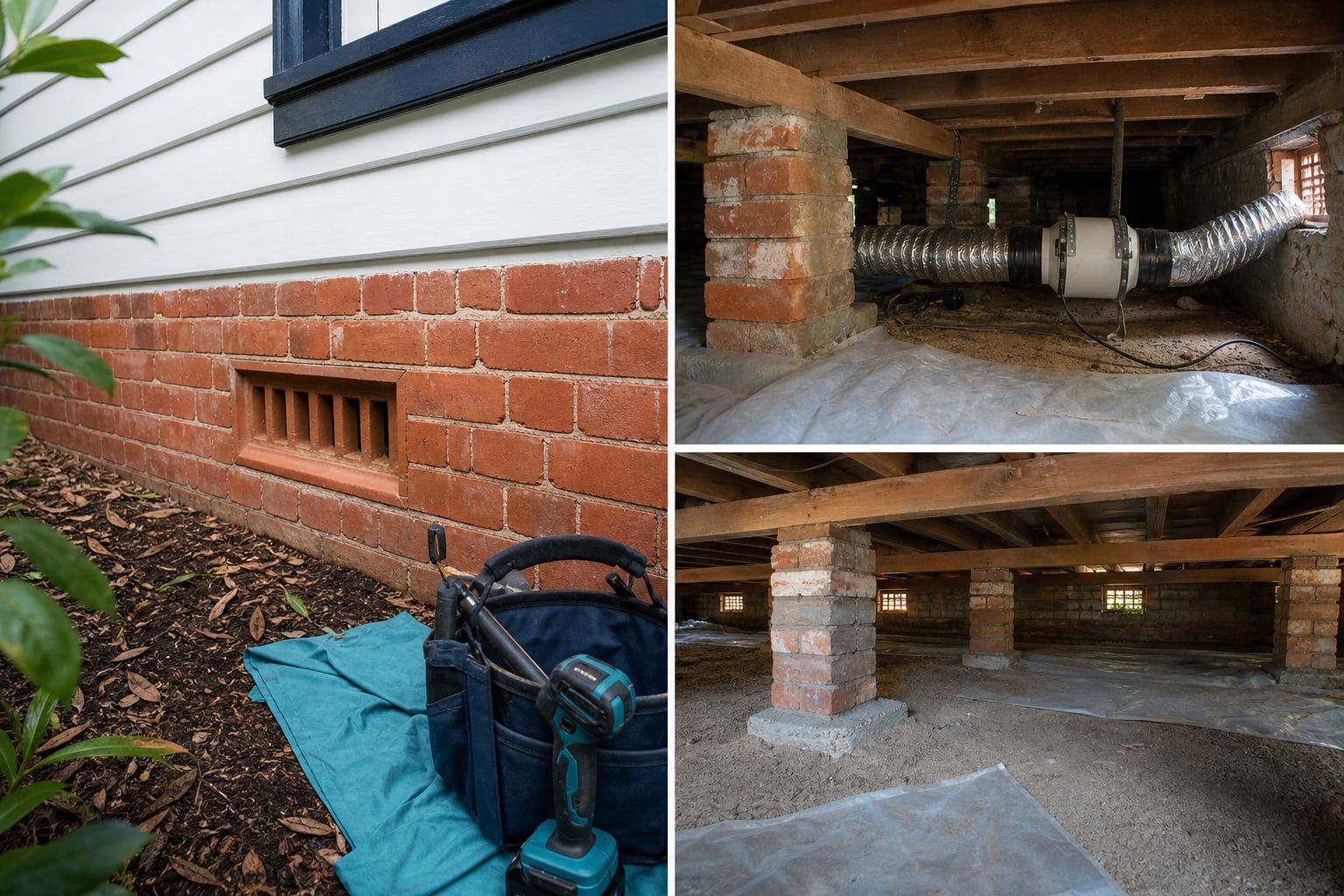
Subfloor Ventilation across the Northern Beaches
Subfloor Ventilation in the Northern Beaches: step by step
- Get underWe check soil moisture, timber readings, vents, pipes and any signs of mould or rot.
- Fix the water firstLeaking pipes, downpipes discharging under the house and blocked drainage come before airflow.
- Open the airflowBlocked vents are cleared and new ones are added so air can cross the whole subfloor.
- Add fans if neededWhere natural airflow isn't enough, quiet inline fans pull air through on a set path.
Subfloor Ventilation guides for Northern Beaches homeowners
- Damp in hillside homes: why sloping Northern Beaches blocks get wet wallsHow water moves through the slopes behind Northern Beaches houses, how to tell it from rising damp, and what actually keeps the lower walls dry.
- Damp under beach cottages: subfloor moisture in coastal Northern Beaches homesWhy the crawl space under older beach cottages stays damp, what it does to floors and walls, and how to dry it out.
Subfloor Ventilation questions in the Northern Beaches
Something else on your mind? Call and ask.
Do I need fans, or just more vents?
Many subfloors only need vents cleared and added so air can cross from one side to the other. Fans help where the house is long, sits low, is sheltered from wind or backs onto a hill. We check airflow paths before suggesting either.
Will fans run all the time?
They can, or they can run on a timer or humidity controller. Quiet inline fans use little power and are installed so you won't hear them inside.
Can I put plastic down on the soil?
A vapour barrier helps on some subfloors, but only once drainage and airflow are sorted. On its own over wet ground it can trap water against the soil and do little for the timbers.