Damp in hillside homes: why sloping Northern Beaches blocks get wet walls
How water moves through the slopes behind Northern Beaches houses, how to tell it from rising damp, and what actually keeps the lower walls dry.
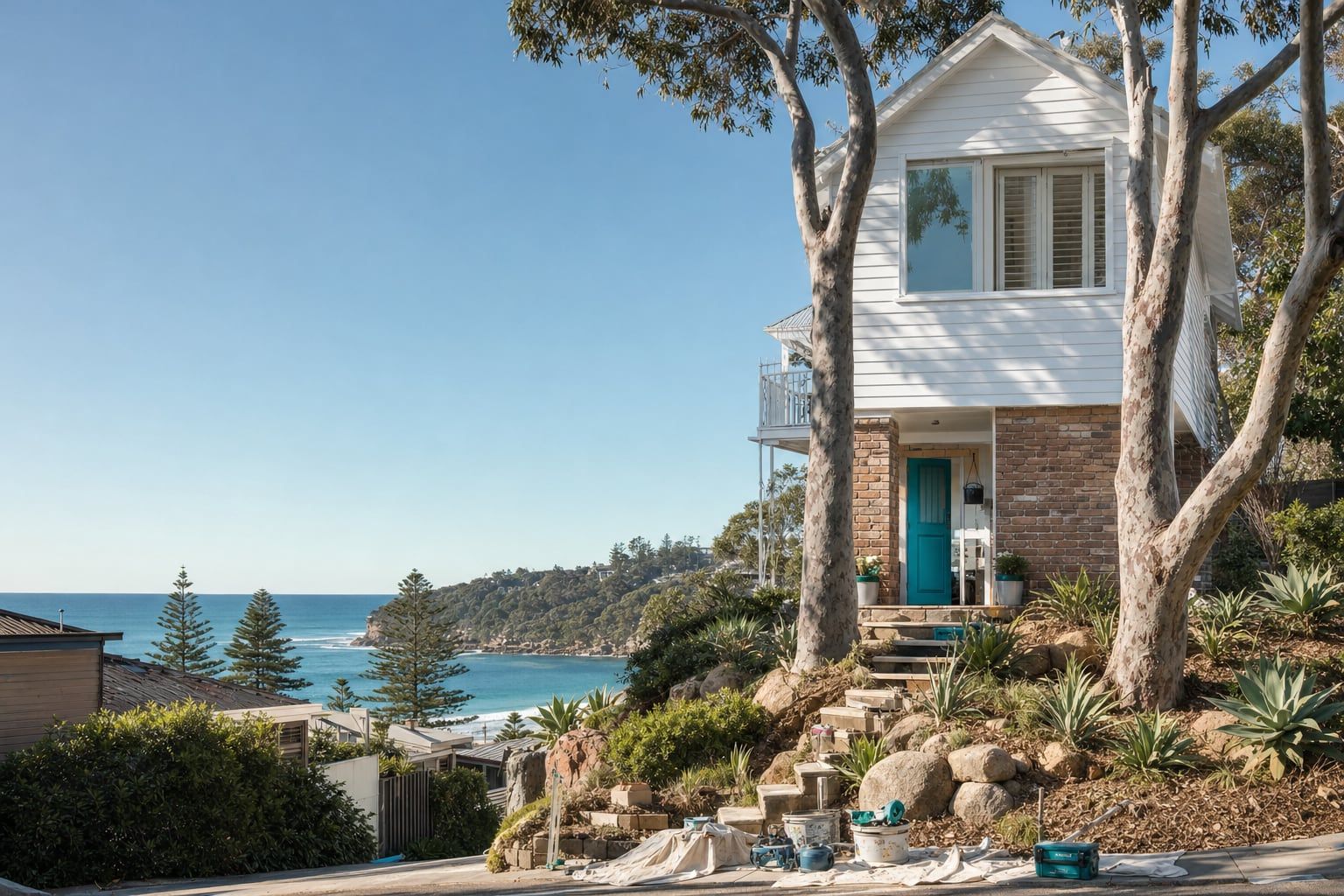
Damp in hillside homes is one of the most common problems we see on the Northern Beaches, and one of the most often misdiagnosed. A large part of the peninsula is built on slopes: the ridges behind Manly and Seaforth, the escarpment above Dee Why and Collaroy, the plateaus at Elanora Heights and Bilgola, and the steep streets that climb from Newport, Avalon and Palm Beach. Houses on those slopes get wet walls for different reasons from houses on flat ground, and treating them as ordinary rising damp often wastes money.
How water moves through a Northern Beaches slope
Most of the peninsula’s high ground is Hawkesbury sandstone with a layer of clay or sandy soil over it. When it rains, water soaks into the soil until it reaches the rock or a dense clay layer, then travels downhill along the top of it. On a steep block, that water can move a long way through the ground before it surfaces.
When a house is cut into the slope, its uphill walls sit right in that path. The back wall of a split-level house, a lower floor dug into the hill, a garage built underneath, or a retaining wall forming one side of a room all intercept water moving down through the hillside. That water presses against the wall and soaks through it.
It also flows under the house. Many hillside homes are built on piers on the downhill side, and the subfloor becomes a channel for water coming off the slope above. Damp ground under the floor raises humidity in the crawl space and keeps the timbers and the base of the walls wet.
Signs it’s the hill, not rising damp
The two can look similar on the surface: damp walls, flaking paint, salt, mould and a musty smell. The difference is in the pattern.
It changes with rain. Rising damp is there all year, wet weather or dry, because the ground under the house is always damp. Hillside seepage gets noticeably worse a day or two after heavy rain and eases off in dry spells.
It’s worst on the uphill side. Rising damp affects walls fairly evenly at their base, all around the house. Seepage is wettest on the walls facing up the slope, and often barely touches the downhill walls.
It goes higher than it should. Rising damp usually fades out below about a metre. On a wall with soil against it, damp can extend as high as the ground outside, which on a cut wall might be most of the way up.
It can show as running water. In heavy rain, some below-ground walls actually weep, with water trickling down the face or pooling at the base. That never happens with rising damp alone.
Meter readings at several heights and positions make the pattern clear, which is why we always measure before recommending anything.
What doesn’t work
A chemical damp course injected along the base of a wall that’s dug into the hill will stop water rising from the footing, but it does nothing about water pushing through the wall above it. We’ve seen plenty of hillside homes that had a damp course put in years ago and are still damp, because the real problem was the slope.
Painting the inside with waterproof paint doesn’t work either. Water behind the wall pushes the paint off, and the salt it carries breaks down the finish.
What does work
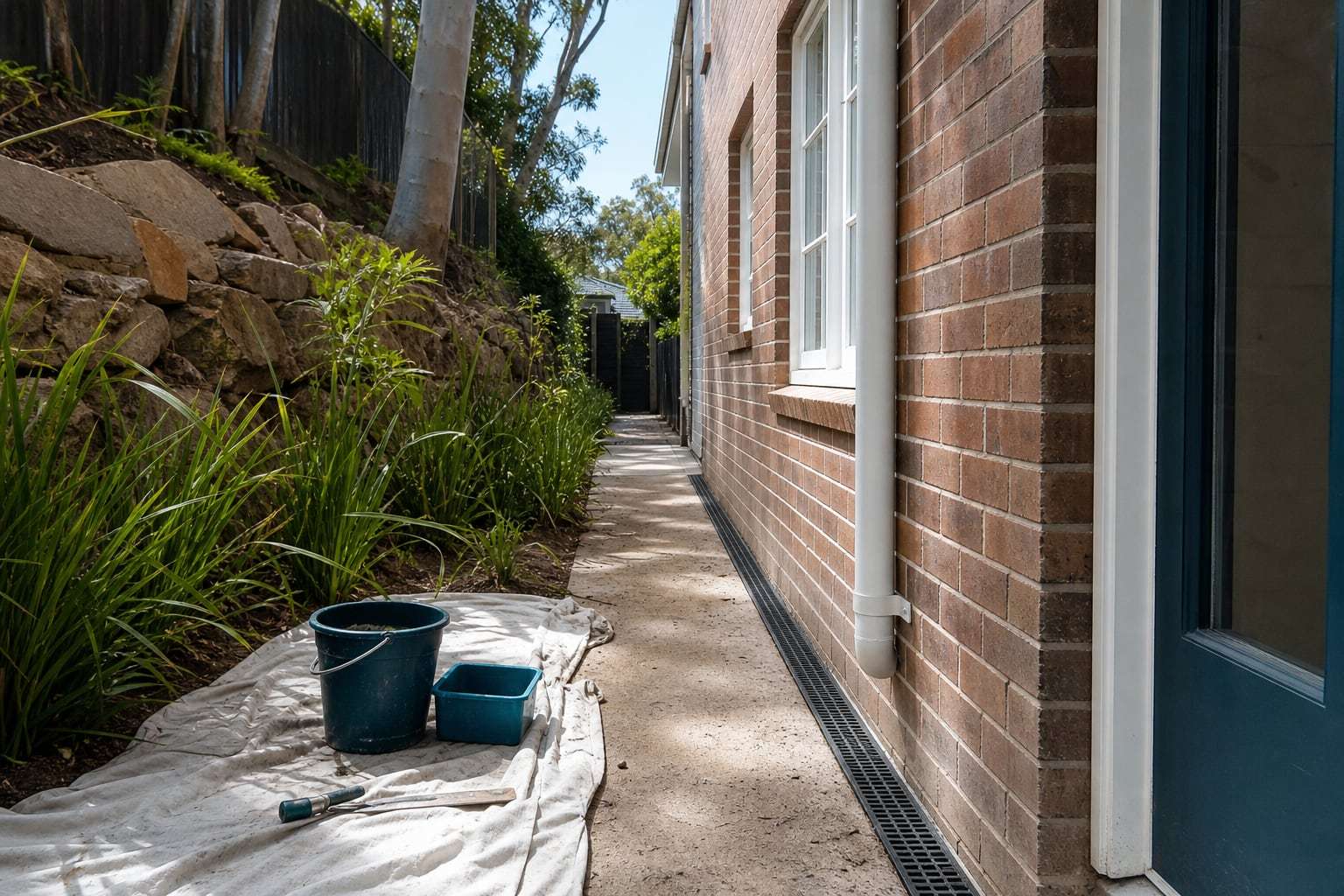
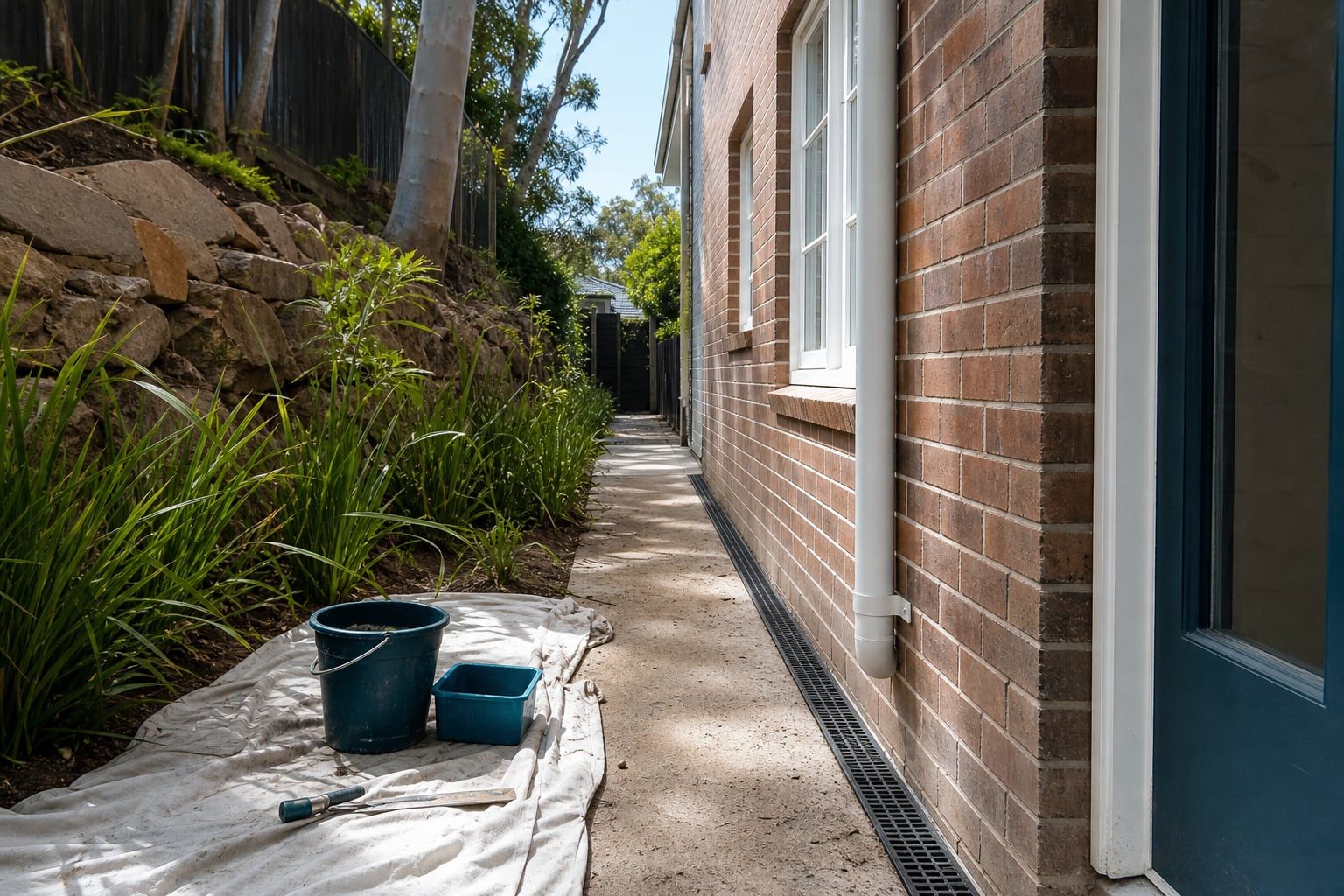
Drainage on the uphill side. The most effective fix is usually to stop water reaching the wall in the first place. An agricultural drain set into a gravel trench along the uphill side of the house, at or below the depth of the floor, collects water moving down through the slope and carries it away to the stormwater. Where access is tight it may run along a retaining wall or across the top of the block.
Clearing soil away from the wall. Where a garden bed, fill or paving has been built up against an uphill wall over the years, lowering it below floor level takes a lot of the pressure off. Sometimes this alone fixes the problem.
Waterproof tanking. Where soil or rock has to stay against the wall, as with a room cut into sandstone, a waterproof tanking system on the inside face stops water coming through. It’s built up in layers, taken around corners and onto the floor, then protected with render so the room can be finished normally. Our page on tanking and drainage explains the process in detail.
Subfloor airflow. Where water runs under the house, getting it out with drainage and then moving air through the crawl space with subfloor ventilation dries the timbers and the base of the walls.
A damp course where it’s genuinely needed. Some hillside homes also have true rising damp in their internal walls or downhill walls. Those still need a barrier, but only as part of a plan that deals with the slope first.
Retaining walls
Many Northern Beaches blocks rely on retaining walls, and many of them were built without drainage behind them. Water builds up in the soil behind an undrained retaining wall, which keeps any house wall nearby wet and puts pressure on the retaining wall itself. If we see cracking, bulging or leaning, we’ll recommend you get an engineer to look at it before any damp work goes ahead.
Older houses and later additions
A lot of the hillside damp we see comes from work done after the house was built. Lower levels were dug out to add a rumpus room or garage, decks were built over drains, paths were concreted up to the wall, or a neighbour’s development changed where water flows. The house was dry for decades, then the ground around it changed.
That history matters, because it tells us where to look. If damp started after a renovation next door or after a new driveway went in, the fix is probably outside.
Getting it diagnosed
If you live on a slope and have a damp lower level, the most useful thing is an accurate diagnosis. We take readings across every affected wall, check the slope, drainage, retaining walls and subfloor, and look at how the damp changes with weather. Then we tell you whether it’s seepage, rising damp treatment territory, or both, and what each part will take to fix.
If you’re unsure whether your house has rising damp at all, our page on rising damp symptoms is a good starting point. For a broader overview, see Northern Beaches rising damp.
Updated
Damp in hillside homes: common questions
Something else on your mind? Call and ask.
Why is my downstairs room damp only after rain?
That timing points to water moving through the slope rather than rising damp. Rain soaks into the hill, travels down through the soil or along the top of the rock, and reaches the walls cut into the hillside a day or two later.
Will a damp course fix a wall dug into the hill?
Not on its own. A damp course stops water rising from the footing, but water pressing in through the side of the wall comes in above it. Those walls need drainage on the uphill side, tanking on the inside face, or both.
Is hillside seepage a structural problem?
Usually it's a damp problem rather than a structural one, but water building up behind retaining walls and under footings can cause movement over time. If we see cracking or a leaning wall, we'll tell you to get an engineer to look at it.
Waterproof Tanking and Drainage in the Northern Beaches
More guides for Northern Beaches homeowners
- Salt air and damp walls: what the coast does to Northern Beaches masonryWhy walls close to the ocean can look and test damp without any rising damp, how to tell the two apart, and how to look after coastal masonry.
- Damp under beach cottages: subfloor moisture in coastal Northern Beaches homesWhy the crawl space under older beach cottages stays damp, what it does to floors and walls, and how to dry it out.