Damp under beach cottages: subfloor moisture in coastal Northern Beaches homes
Why the crawl space under older beach cottages stays damp, what it does to floors and walls, and how to dry it out.
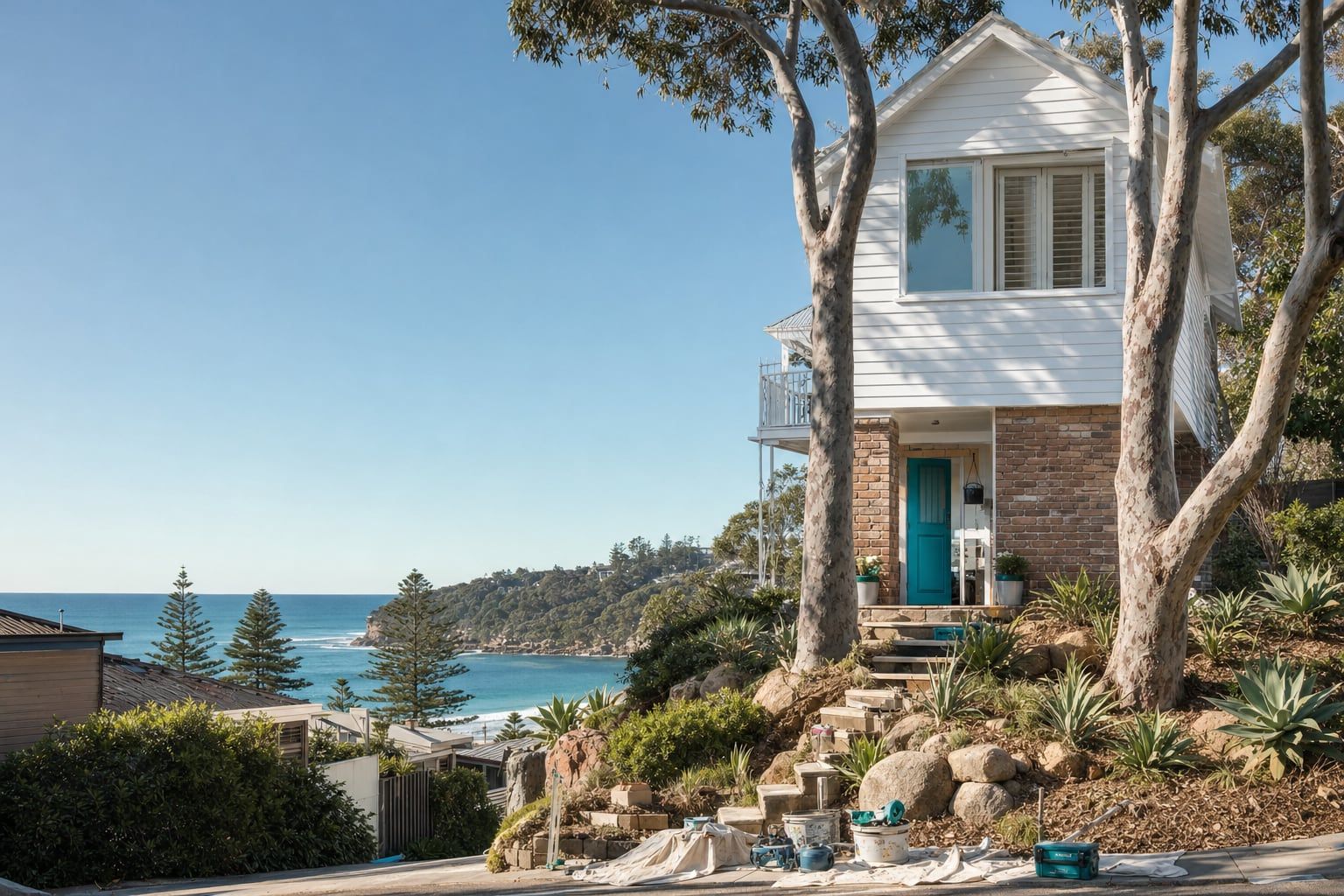
Damp under beach cottages is a quiet problem that shows up slowly. Across the Northern Beaches, from the older streets of Narrabeen and Collaroy to Newport, Avalon and Palm Beach, many of the original holiday and beach cottages still stand. Most sit on brick or timber piers, often with a short brick or stone base wall around the edge, and a timber floor raised just above the ground. The space under that floor decides how dry the house is.
When the crawl space stays damp, the floor framing absorbs moisture, the bottom of the walls stays wet and the rooms above smell musty. Over years it leads to soft floorboards, rotting bearers, mould in cupboards and flaking paint along the base of the walls.
Why beach cottages get damp underneath
They sit low. Many cottages were built with very little clearance under the floor, sometimes not enough to crawl through. Low subfloors have less air moving through them and dry out slowly.
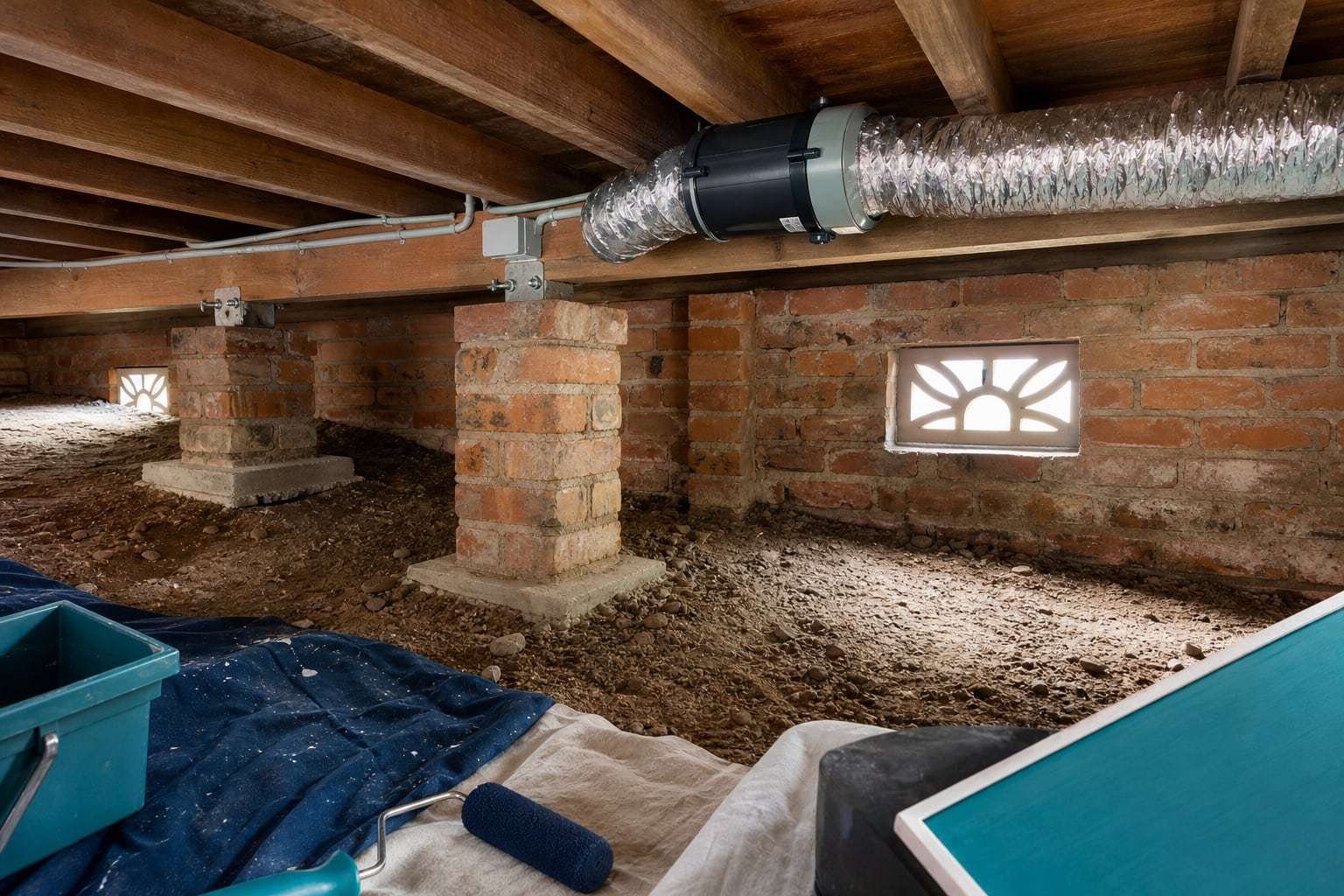
Their vents get blocked. Over decades, the original vents get covered. Garden beds are built up against the base wall, decks are added over vents, extensions close off one side of the subfloor, and wind-blown sand builds up against low vents near the beach. With nowhere for air to go, the crawl space becomes still and humid.
The ground can be wet. Near the lagoons and the Narrabeen Lakes the water table sits close to the surface, so the soil under the house stays damp for long periods. On blocks backing onto a slope, rain runs under the house from the uphill side. And downpipes on older cottages often discharge straight onto the ground beside the house, where the water soaks in underneath.
Salt air speeds things up. Coastal humidity is high, and salt air corrodes metal vent grilles, fixings and stirrups under the house faster than inland. Rusted-out grilles get replaced with solid covers, which closes off airflow even further.
Signs to look for
Inside the house, watch for a musty smell, especially in winter and in the rooms closest to the ground, floorboards that cup, feel spongy or have gaps opening up, mould on the backs of wardrobes or behind furniture on outside walls, and paint flaking along the bottom of walls.
Outside, look at the base wall. Are the vents visible and clear? Is soil or sand built up against them? Do downpipes run into a drain, or onto the ground?
Under the house, damp soil, white or grey mould on timber, rust on metal fixings and a musty smell confirm the problem. A moisture meter on the bearers and joists tells you whether the timber is at risk of decay.
What dampness does to the structure
Timber that stays damp for long periods becomes vulnerable to fungal decay, and the bearers and joists closest to the ground and to the base wall usually go first. Brick piers and base walls draw water up from the ground, and where they meet the timber, the bottom plates of the walls can rot.
In cottages with a brick or stone base wall, the masonry itself can have rising damp. That shows inside as damp and salt along the bottom of the walls, the same as in a solid brick house.
How to dry a beach cottage out
Deal with the water first. Connect downpipes to drainage, lower garden beds and sand that sit against the base wall, and fix any leaking pipes. On sloping blocks, a drain on the uphill side stops rain running under the house. Our guide on damp in hillside homes covers that in more detail.
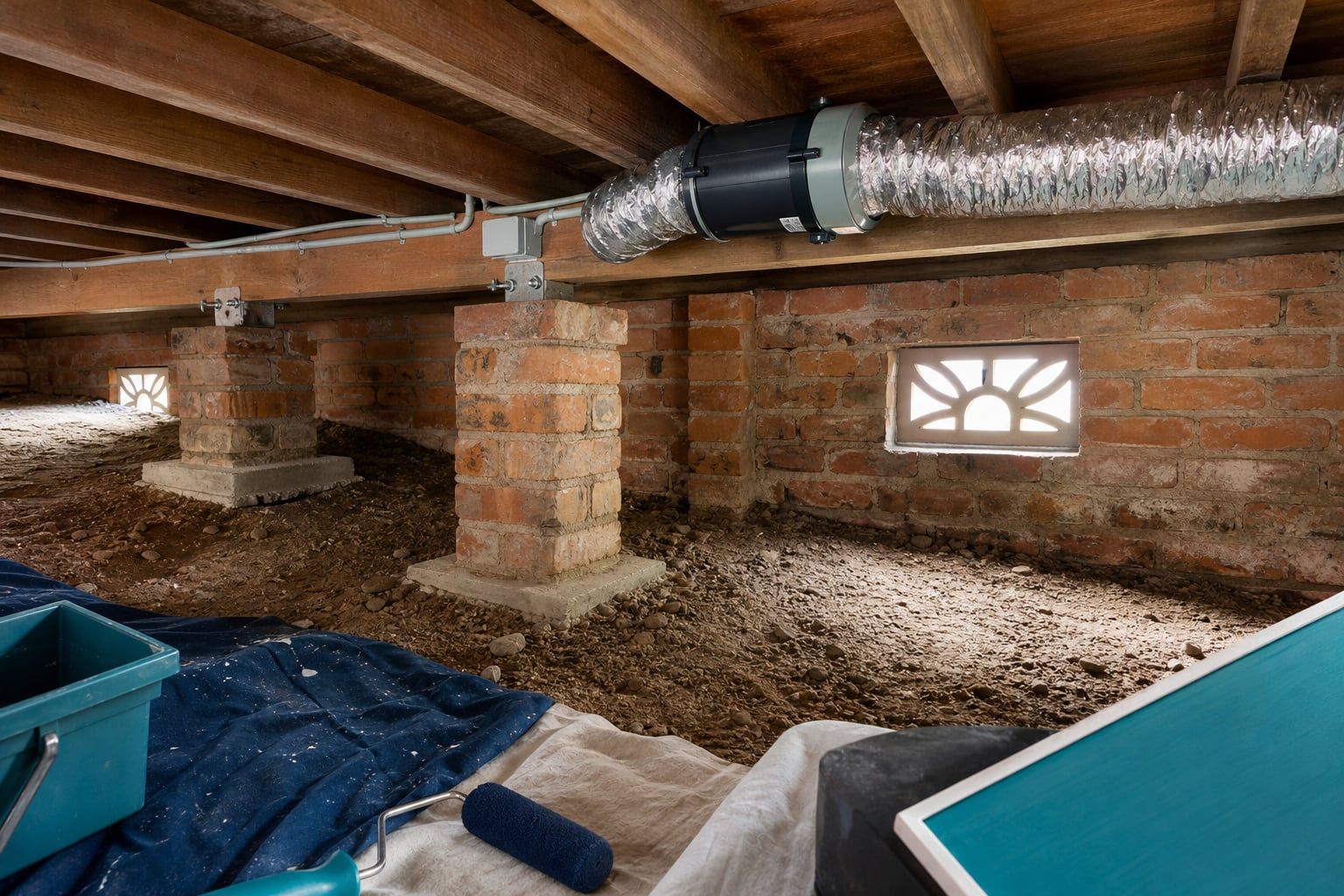
Reopen and add vents. Air has to come in on one side and leave on the other. Clearing blocked vents and adding new ones, using grilles suited to coastal conditions, gets the crawl space breathing again.
Add fans where needed. In very low or sheltered subfloors, natural airflow often isn’t enough. Quiet inline fans pull air through the crawl space on a set path and can run on a timer or humidity control. Our page on subfloor ventilation explains the options.
Treat the base wall. Where the brick or stone base wall has rising damp, it needs a barrier. Stone and old soft brick usually need a physical damp course, cut in short sections so the wall stays supported.
Check the timber. Once the subfloor is drying, any bearers, joists or bottom plates that have decayed need assessing and, where necessary, replacing.
Renovating a beach cottage
If you’re planning to renovate, sort the subfloor first. New floors, kitchens and bathrooms laid over a damp crawl space will be affected by it. It’s far easier to fix drainage and airflow before the new work goes in than to pull it up later.
It’s also worth keeping the vents in mind during the work. Extensions, decks and landscaping are the most common reasons beach cottages lose their subfloor airflow.
Getting it checked
We get under the house, measure the soil and timber moisture, look at every vent and drainage point, and check the base walls for rising damp. Then you get a written plan that sets out what’s needed and in what order. If the walls need more than airflow, our page on rising damp treatment explains how the full job fits together.
For the wider picture, see our overview of Northern Beaches rising damp, or check the symptoms of rising damp to see what to look for inside.
Updated
Damp under beach cottages: common questions
Something else on your mind? Call and ask.
Why does my cottage smell musty in winter?
Cooler weather means the subfloor dries more slowly, and still, damp air under the floor finds its way up through gaps in the boards. A musty smell that's worse in winter and in rooms closest to the ground often comes from the subfloor.
My cottage is weatherboard. Can it still get damp?
Yes. Weatherboard walls don't wick water up the way brick does, but the floor framing, the bottom plates of the walls and any brick or stone piers and base walls can stay wet if the subfloor is damp.
Are termites linked to subfloor damp?
Damp timber and humid crawl spaces are attractive to termites, so drying a subfloor makes it less inviting. Have a pest inspector check for termites separately; we'll tell you if we see signs while we're under the house.
Subfloor Ventilation in the Northern Beaches
More guides for Northern Beaches homeowners
- Damp in hillside homes: why sloping Northern Beaches blocks get wet wallsHow water moves through the slopes behind Northern Beaches houses, how to tell it from rising damp, and what actually keeps the lower walls dry.
- Salt air and damp walls: what the coast does to Northern Beaches masonryWhy walls close to the ocean can look and test damp without any rising damp, how to tell the two apart, and how to look after coastal masonry.