Salt air and damp walls: what the coast does to Northern Beaches masonry
Why walls close to the ocean can look and test damp without any rising damp, how to tell the two apart, and how to look after coastal masonry.
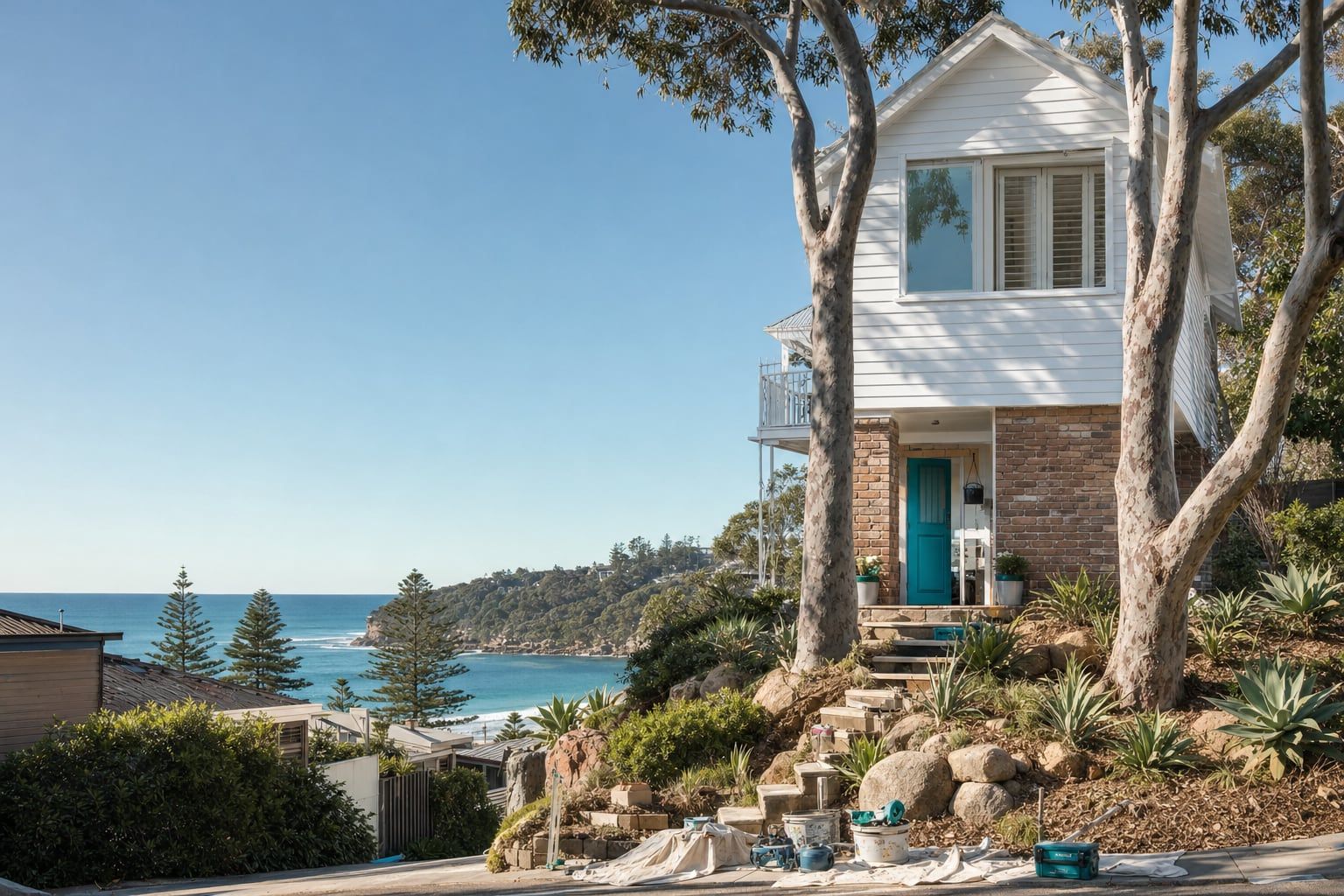
Salt air and damp walls go together on the Northern Beaches more than most people realise. Houses along the coast from Queenscliff to Palm Beach live with a steady supply of airborne salt carried off the ocean by the wind. Over years, that salt builds up in brick, render and mortar, and once it’s there it changes how the wall behaves. A wall loaded with sea salt can look damp, feel damp and read damp on a meter, even when there’s no rising damp at all.
That matters because the two problems need different fixes. Injecting a damp course into a wall that’s damp from salt air won’t help, and treating rising damp as a coastal salt problem leaves the real cause in place.
How salt gets into coastal walls
Breaking waves throw fine droplets of seawater into the air, and onshore winds carry them inland. When the droplets land on a wall and the water evaporates, the salt stays behind. Rain washes some off, but much of it soaks into porous render, mortar and brick.
Walls facing the ocean, usually east and south-east, get the most. So do walls under eaves where rain doesn’t reach to rinse them, balconies and upper floors with direct exposure, and anything near a headland where the wind funnels spray inland. Houses at Manly, Freshwater, Curl Curl, Dee Why, Long Reef, Mona Vale and Avalon all see it, and the effect drops off the further you go from the water.
Why salty walls look damp
Sea salt is hygroscopic: it pulls moisture out of the air. When the humidity rises, which on the coast is often, salt in the wall surface absorbs water and the surface becomes damp. When the air dries out, the water evaporates and the salt crystallises again. That cycle repeats over and over.
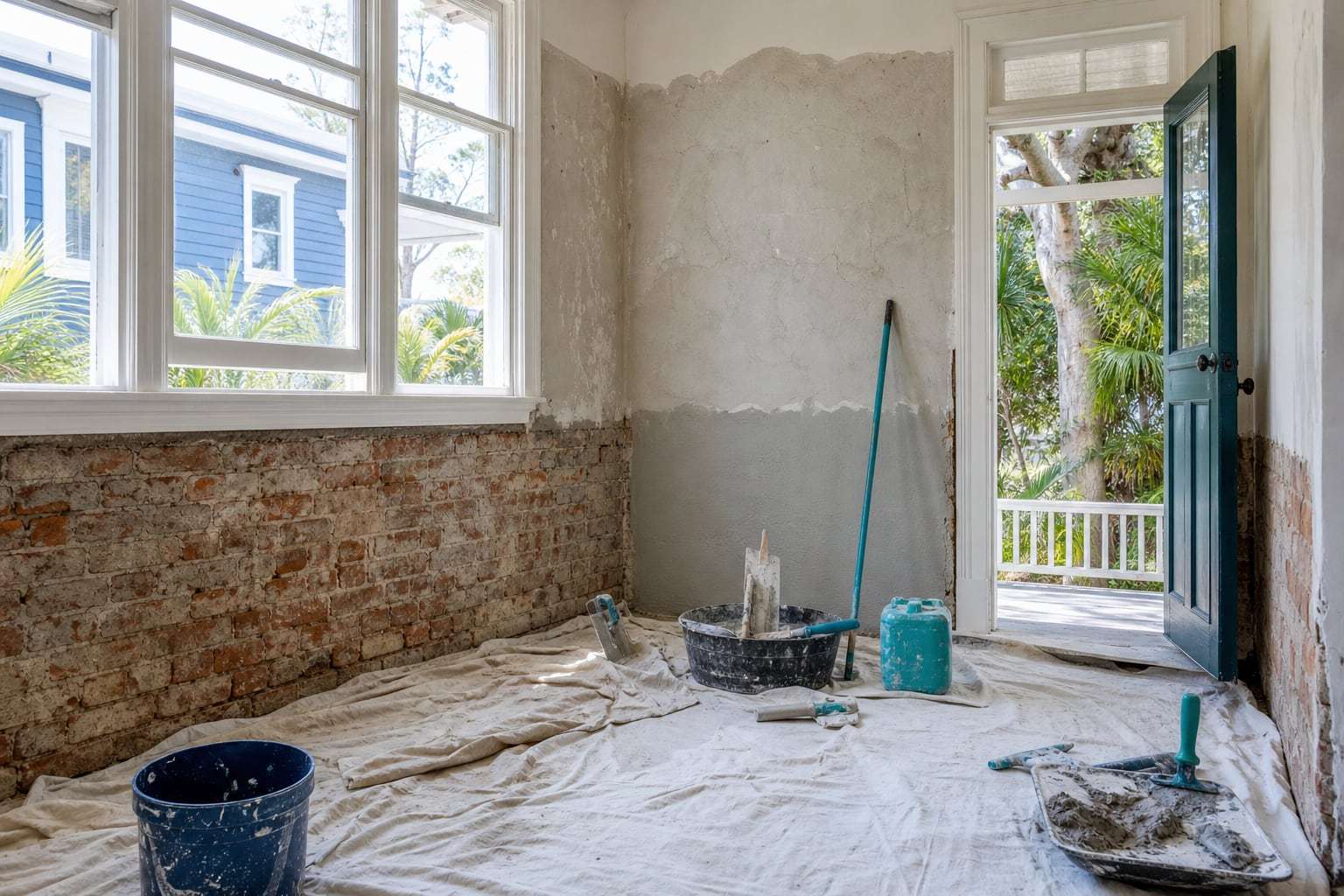
Each time the salt crystallises, it expands slightly inside the pores of the render or brick. Over time that breaks the surface apart. Render goes powdery and falls off in patches, paint blisters and peels, mortar joints crumble, and soft bricks lose their faces. The damage looks very like rising damp damage, which is why the two are so often confused.
How to tell coastal salt from rising damp
Several things separate them.
Where the damage is. Rising damp affects the base of walls, fading out below about a metre, on every side of the house. Coastal salt damage follows exposure. It’s worst on the ocean-facing walls and can appear high up, on upper floors, under eaves and around windows, as well as low down.
Whether it’s inside or out. Rising damp shows on both sides of the wall, usually worst inside behind skirtings. Airborne salt mostly affects the outside face, and only reaches the inside where the wall is thin or the salt has been working in for many years.
How it responds to weather. Rising damp is fairly constant. Salt damp follows humidity: it gets worse on muggy, still days and in sea mist, and eases in dry westerly weather.
What the readings show. A moisture meter reads salt as water, so surface readings alone can mislead. We take readings at depth as well as on the surface. In a wall with rising damp the masonry is wet right through near the base. In a wall with salt contamination the surface reads high but the inside of the brick is drier. We also test the plaster for salts.
Many houses near the beaches have both, and the plan has to cover each part.
Looking after coastal walls
Rinse exposed walls. Hosing salt off ocean-facing walls and the areas under eaves a few times a year reduces how much builds up. It sounds simple, but it makes a real difference to how long render and paint last.
Use breathable finishes. Coastal masonry needs to be able to dry through its surface. Acrylic paints and sealers that trap moisture behind them fail quickly on salty walls, because the salt crystallises under the coating and pushes it off. Breathable paints and mineral or lime-based renders hold up much better.
Replace salt-loaded render properly. Once render is badly contaminated, patching won’t hold. The salty material needs to come off and be replaced with a salt-tolerant system. Our page on salt-damaged plaster repair explains the process.
Repoint crumbling joints. Where mortar has been eaten back by salt, raking it out and repointing with a suitable mortar stops water getting deeper into the wall.
When it’s rising damp as well
Houses on the low ground near the beaches and lagoons often have genuine rising damp too, especially around Manly Lagoon, Dee Why Lagoon and the Narrabeen Lakes, where the water table is high. In those houses, the base of the walls needs a proper barrier such as a chemical damp course, and the coastal salt on the upper walls needs managing separately.
Getting the diagnosis right saves money. We’ve seen coastal houses where a full damp course was quoted for walls that only needed salt-damaged render replaced, and others where repainting was recommended for walls with serious rising damp.
Getting your walls checked
If your house is near the coast and you’re seeing flaking render, blistering paint or white crystals on the walls, a proper check will tell you what’s going on. We measure at the surface and at depth, test for salts, look at which walls are affected and how the house is exposed, and then explain what’s causing the damage. If it’s rising damp, our rising damp treatment page covers how we fix it.
Our page on signs of rising damp shows the symptoms side by side, and our overview of Northern Beaches rising damp explains how we work.
Updated
Salt air and damp walls: common questions
Something else on your mind? Call and ask.
Can salt air make a wall feel damp?
Yes. Salt that settles in render and brick from sea spray and wind attracts moisture from humid air. On muggy days the surface can feel damp and give a high meter reading even though no water is coming from the ground.
How close to the beach does this happen?
It's strongest on houses directly facing the ocean and within the first few streets back, but in strong onshore weather salt is carried well inland across the peninsula. Exposed walls facing east and south-east usually show it first.
Should I seal my coastal walls?
Generally no. Sealing a masonry wall traps salt and moisture behind the coating, and the salt then breaks the coating off from behind. Breathable finishes and regular rinsing of exposed walls work better.
Salt-Damaged Plaster Repair in the Northern Beaches
More guides for Northern Beaches homeowners
- Damp in hillside homes: why sloping Northern Beaches blocks get wet wallsHow water moves through the slopes behind Northern Beaches houses, how to tell it from rising damp, and what actually keeps the lower walls dry.
- Damp under beach cottages: subfloor moisture in coastal Northern Beaches homesWhy the crawl space under older beach cottages stays damp, what it does to floors and walls, and how to dry it out.